Learn about the shades of white, cloth choice, fit and styling, and see what separates a made-to-measure shirt from one bought off the rack.
Journal · Guide
The white shirt: what to know before you buy
Learn about the shades of white, cloth choice, fit and styling, and see what separates a made-to-measure shirt from one bought off the rack.
House of Vinterberg · · 6 min read
The white shirt is one of the most timeless pieces in a man's wardrobe. Yet many end up with a shirt that fits poorly, turns translucent in sunlight or loses its fresh colour after a few washes. That can be avoided. This guide covers the shades of white, the three classic weaves, why fit matters more in white than in any other colour, and when made-to-measure is the right choice.
White is not just white
The white shirt holds more shades than the eye first registers, and the choice between them has a real effect on the overall expression.
Optic white is the sharpest and most light-reflecting variant. It reads defined and formal and works in classic settings such as business and weddings, particularly on men with cool skin tones and dark hair, where the contrast falls naturally. Chalk white is related, but more matte and without the sharp glare.
Broken white and off-white work differently. They carry discreet undertones of grey or cream and soften the expression markedly. These are the shades that suit the Scandinavian aesthetic: calm transitions, natural materials and a palette that works with everything from grey and blue suits to merino wool knitwear. Off-white particularly suits fair and blond men and those with warm skin tones, because it softens hard contrast against the face.
The choice should reflect the primary use: optic white for the formal, broken white for the office and everyday wear. At the Showroom, your personal designer helps settle the choice based on your wardrobe, your skin tone and the situations the shirt will be worn in.
The three weaves
Poplin is the most tightly woven: smooth, light and with a clear, crisp white. The natural choice for formal wear, comfortable in the warm months, and the tight weave makes the shirt less translucent than looser alternatives, which matters in white specifically.
Oxford has a more open weave with visible texture and a more robust, informal expression. It carries everyday use with ease and works with a blazer and relaxed layers, but is less obvious under a structured suit.
Twill is the softest and most draping. The diagonal weave gives a natural body, so the shirt falls neatly and stays in place under a jacket through a long working day.
All three are woven in cotton, which breathes and lasts. The important thing is to see the choice in context: a poplin for the summer wedding and a twill for the working week are two different tools in the same wardrobe.
White amplifies everything, including the fit
A standard shirt is constructed from average measurements, not for the man wearing it. The difference is felt exactly where the body deviates from the average: the shoulder seam slides towards the upper arm, the cuffs disappear under the jacket sleeve, the back pulls at the shoulder blades or bags at the waist. Each flaw on its own is liveable. Together they pull attention away from the man and onto the clothes.
And white is not forgiving. Where dark colours absorb light and tone the silhouette down, white reflects it and highlights the contours directly. A shirt that bags or pulls is more visible in white than in navy or charcoal. White rewards a correct cut and amplifies what sits right, in exactly the same way it amplifies what does not.
For weddings, the meeting room and everyday wear
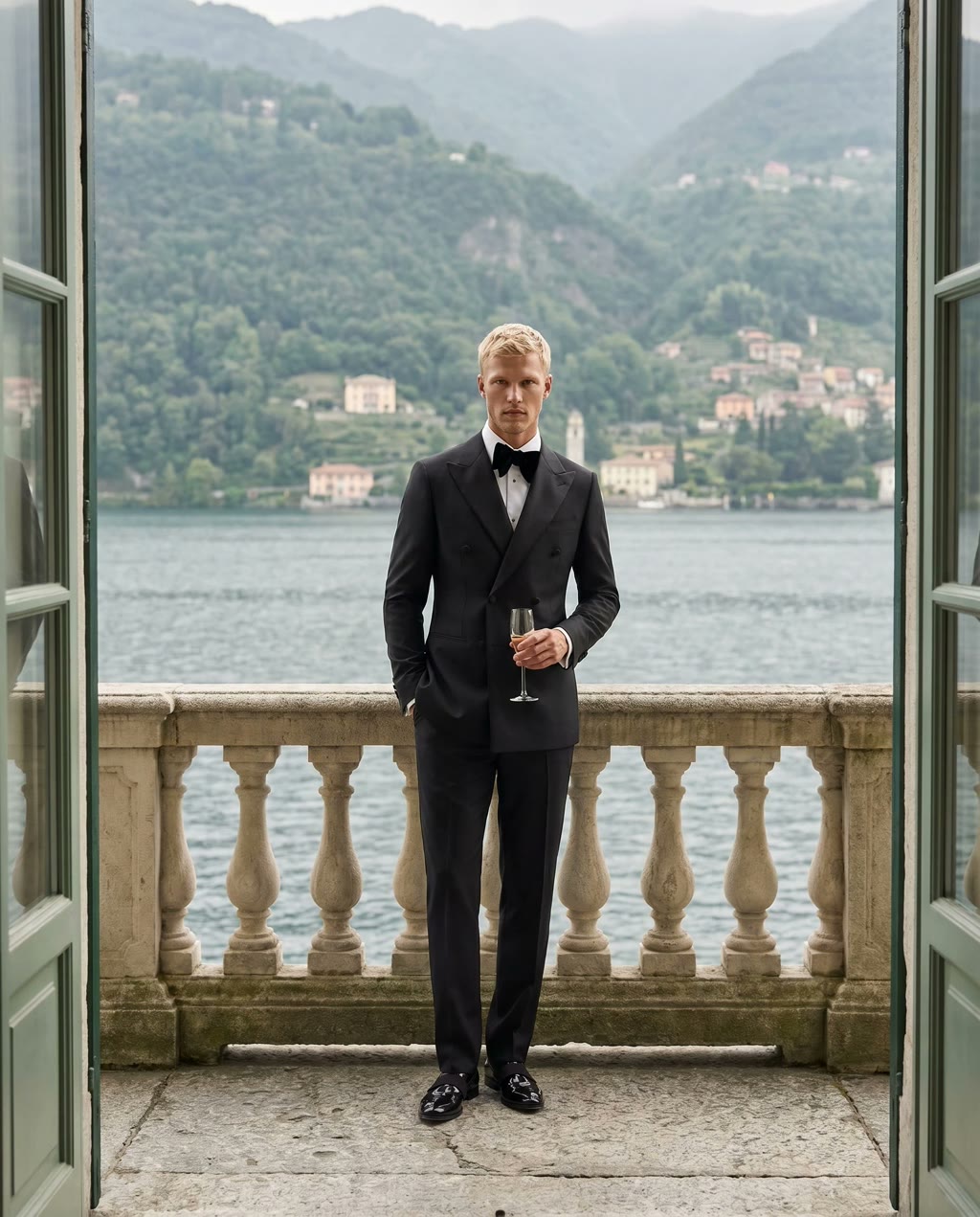
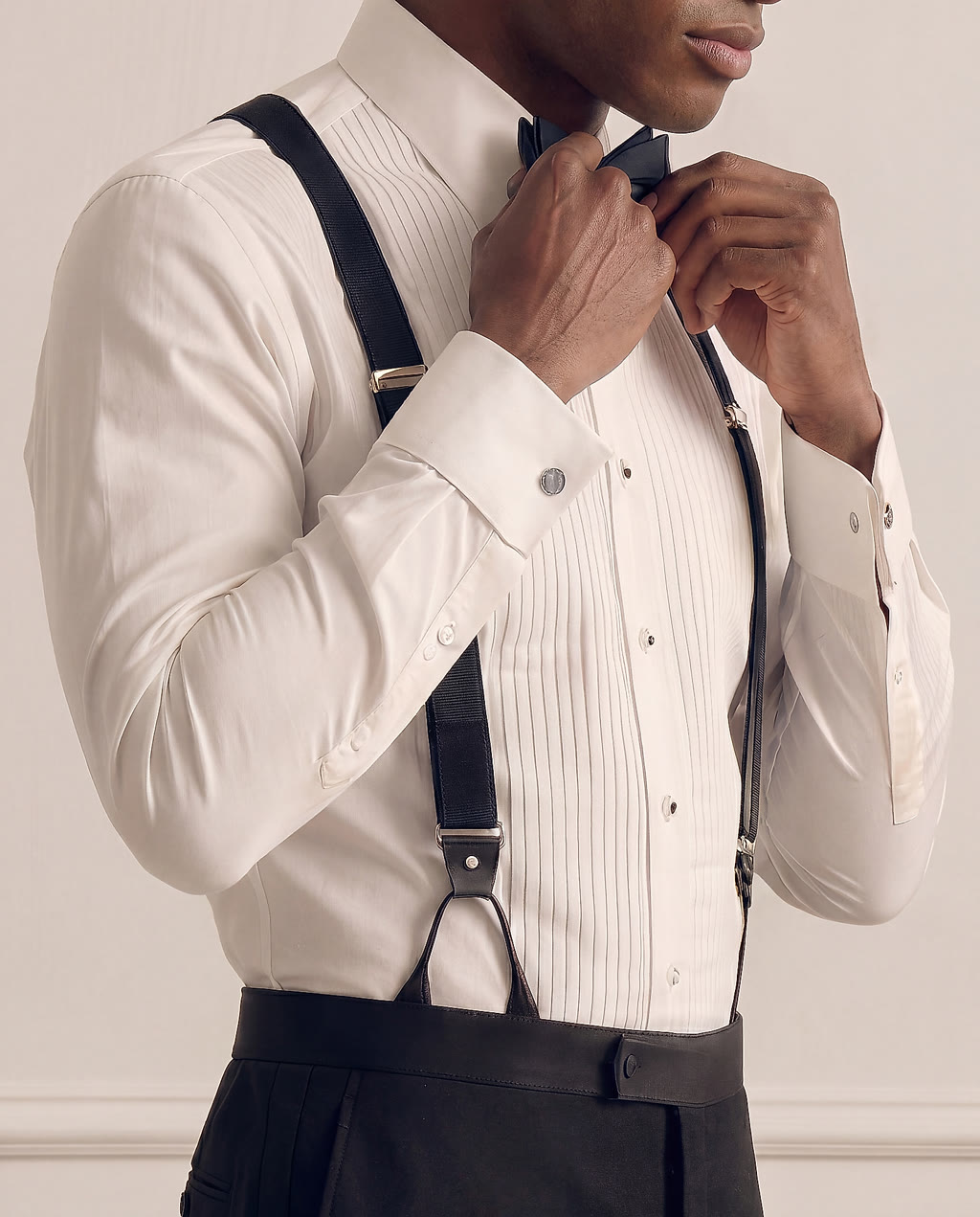
For weddings and black tie, the white shirt is the natural starting point, and the details set the expression: the collar must give room to a well-tied tie, and the cuffs are visible along the jacket edge and contribute actively to the whole.
At the meeting table, the white shirt is worn under a structured suit, where a hand-sewn silk tie or a silk pocket square gives the outfit character. Accessories, in the register House of Vinterberg carries them, adjust the expression from discreetly formal to more pronounced.
In everyday wear, the same shirt can be worn with an open collar and lighter trousers and still pull the expression in a calm, considered direction. A well-cut white shirt in a good cloth does not need many layers to read as deliberate.
The point is that one shirt in the correct fit and the right cloth genuinely covers all three situations. That is a stronger foundation than three shirts that each demand a compromise.
Off the rack or cut for you
House of Vinterberg's Capsule shirts are the route to a quality shirt here and now: timeless cuts in carefully worked cloths, ready for the wardrobe straight away. For most men, that is the natural place to start.
Shirts cut to measure are the answer when standard sizes demand compromises. A man with a broad back and a narrow waist must typically choose between a shirt that strains across the shoulders or one that bags at the waist. A shirt built to his measurements removes that choice: shoulder width, chest, sleeve length, collar and cuff shape are set by the body and the use, not by a standard pattern. The result is a shirt that gets worn, and clothing that gets worn is the best investment in the wardrobe. The shirts hanging unused in the closet all cost something, and none of them solved the problem.
How it works at the Showroom
The process begins with a booking at the Showroom in Copenhagen, where you meet the designer who follows you all the way. The first meeting is a conversation, not a form: what does the everyday look like, which occasions come up, and what already hangs in the wardrobe?
Then the cloths are presented physically. Poplin, oxford and twill are experienced in the hand, not on a screen, and that is a difference that is hard to convey digitally. Measurements are taken directly on the body, combined with the designer's trained eye for what works for your particular silhouette. Nothing is assumed.
There is no minimum purchase and no time pressure. The conversation carries no obligation, and you leave with a foundation that holds, whatever you choose.
A choice that lasts for years
Four parameters decide whether the white shirt becomes an investment or a repeat of a mistaken purchase: the shade, which must work with your skin tone and the rest of the wardrobe; the cloth, which sets the frame for comfort and use; the fit, which is the difference between a shirt that gets worn and one that hangs; and the use, which decides whether one piece can cover many situations.