Merino wool knitwear: a guide to the turtle-neck, the polo and the crew-neck
A guide to quality knitwear in merino wool. The difference between turtle-neck, polo, crew-neck and V-neck, what 14 gauge fine knit means, and how the knit holds its shape year after year.
House of Vinterberg · · 4 min read
Good knitwear is one of the most overlooked investments in a man's wardrobe. A well-chosen merino wool sweater works as hard as a blazer: it keeps you warm without bulk, looks precise without turning formal, and fits both over a shirt and on its own. This guide covers the difference between the four classic models, what fine knit actually means, and how to choose the model that suits your wardrobe.
Why merino wool
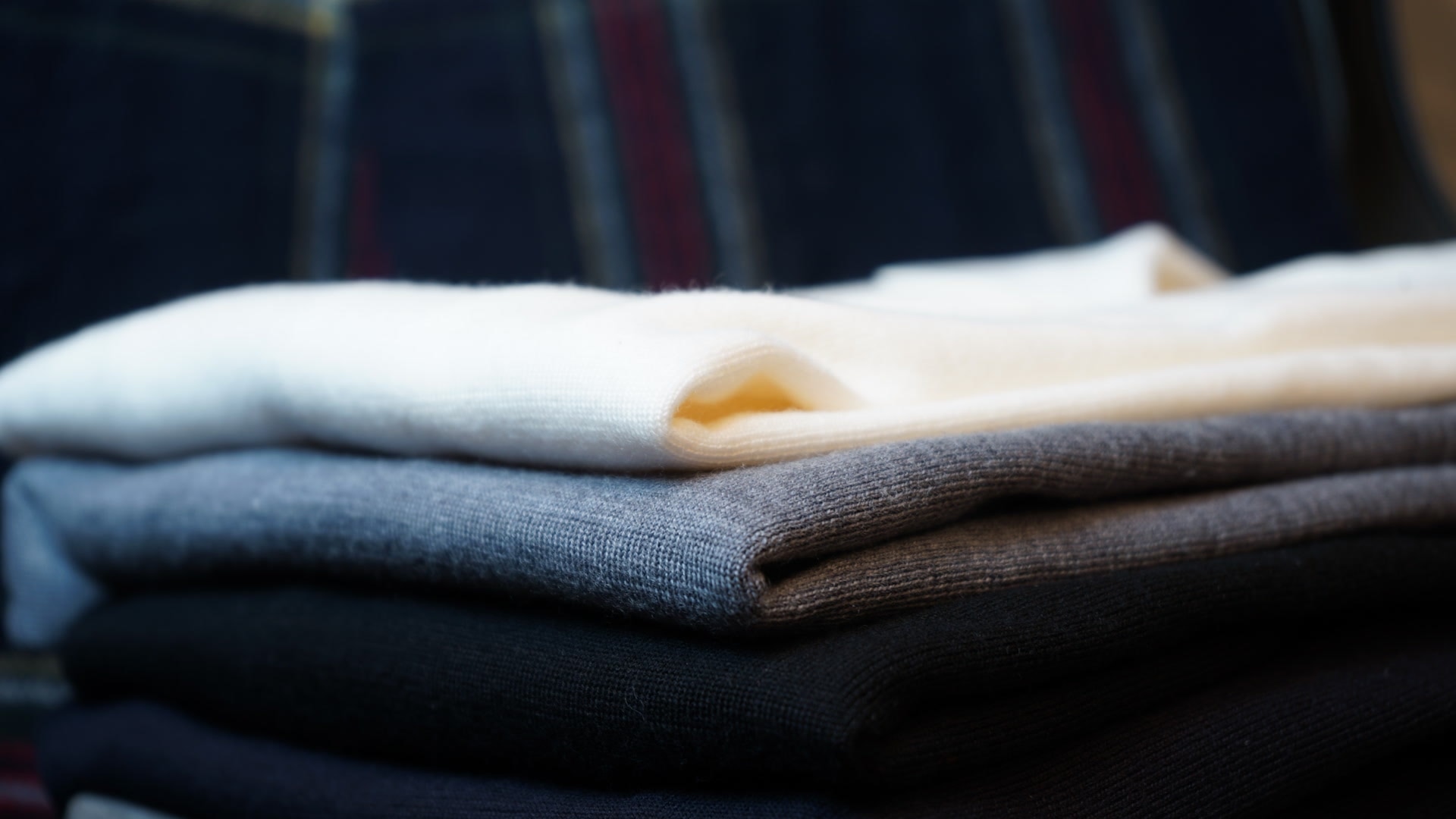
Merino wool is a natural fibre with properties that synthetic blends cannot imitate. The fibres regulate temperature, so the sweater feels comfortable both indoors and out, and they absorb moisture without feeling wet. Wool also has a natural elasticity, which means the knit recovers its shape after wear instead of bagging.
House of Vinterberg's knitwear is knitted from superfine merino wool yarns. Superfine is a classification of the fibre's fineness, and the finer the fibre, the softer and more supple the knit. It is the difference between a sweater that itches and a sweater you forget you are wearing. We cover the fibres and the other cloths under construction and textiles.
The four models
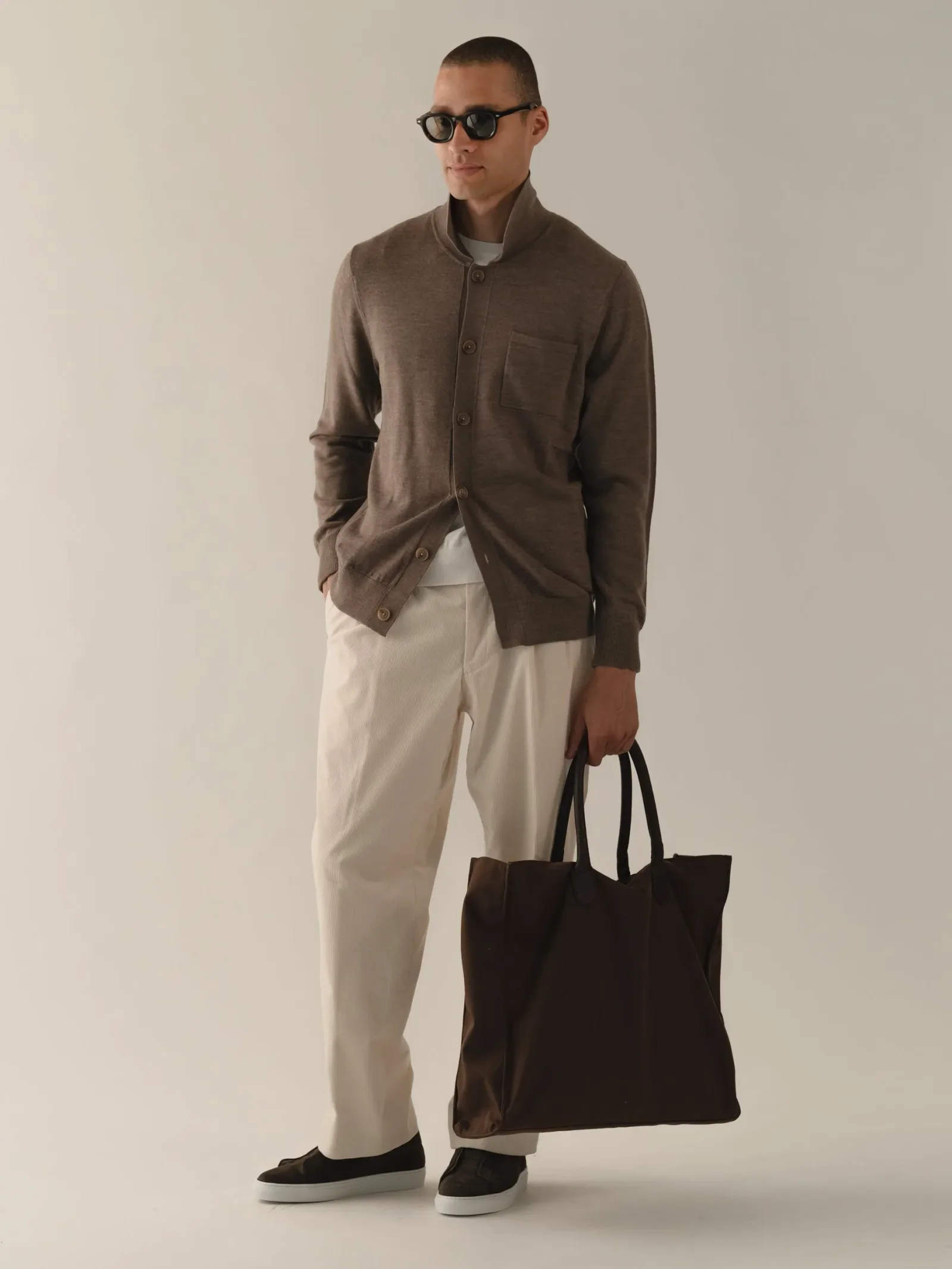
The turtle-neck is winter's most useful model. It replaces shirt and tie under a blazer, stands sharply on its own and belongs in any wardrobe built for the dark months. Choose a neutral colour such as black, navy or grey, so it combines freely.
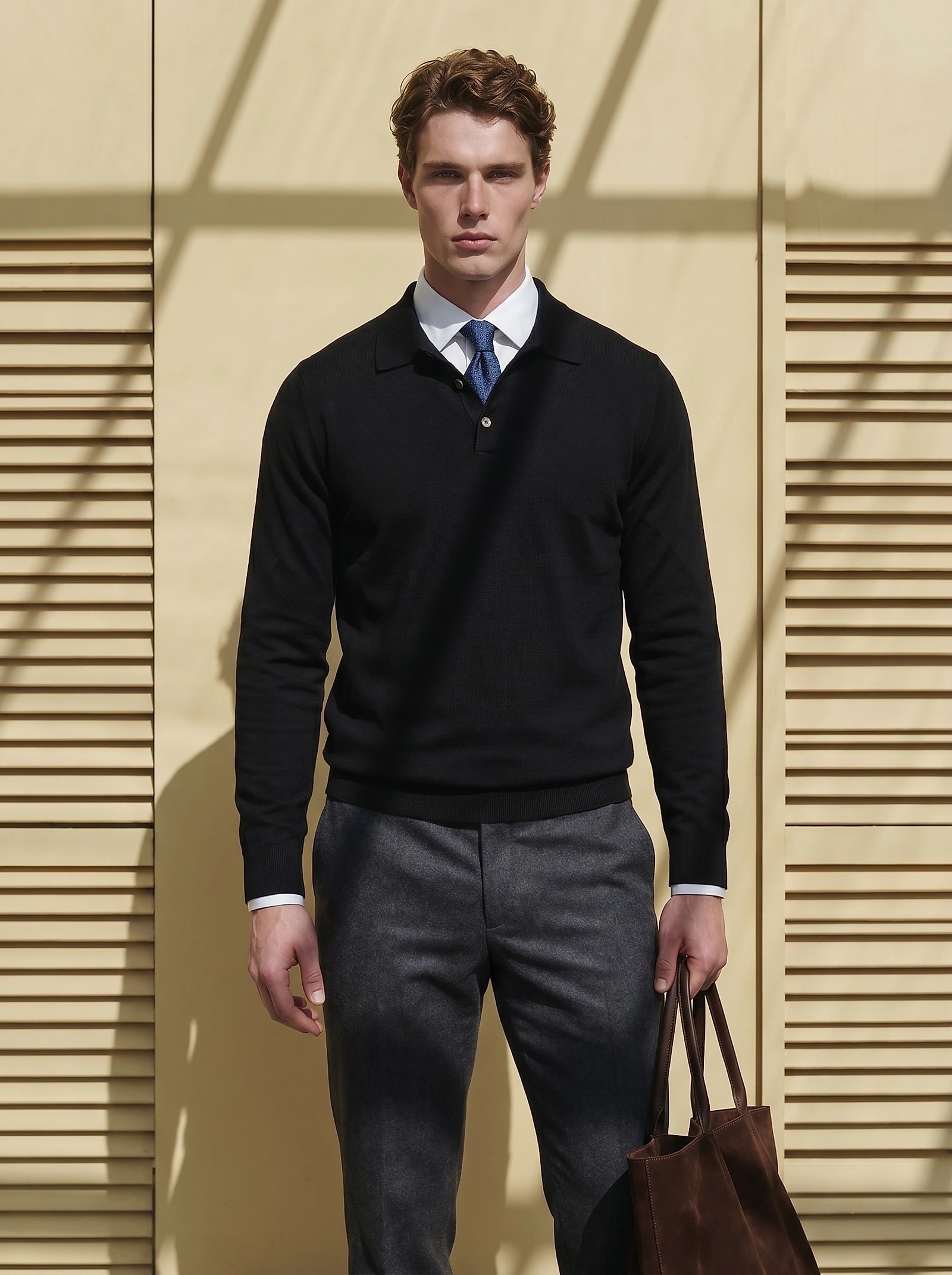
The long-sleeve polo is the most versatile model between seasons. The collar gives it a more dressed expression than a crew-neck, so it can carry an evening out on its own, without a layer on top. It works with everything from chinos to suit trousers.
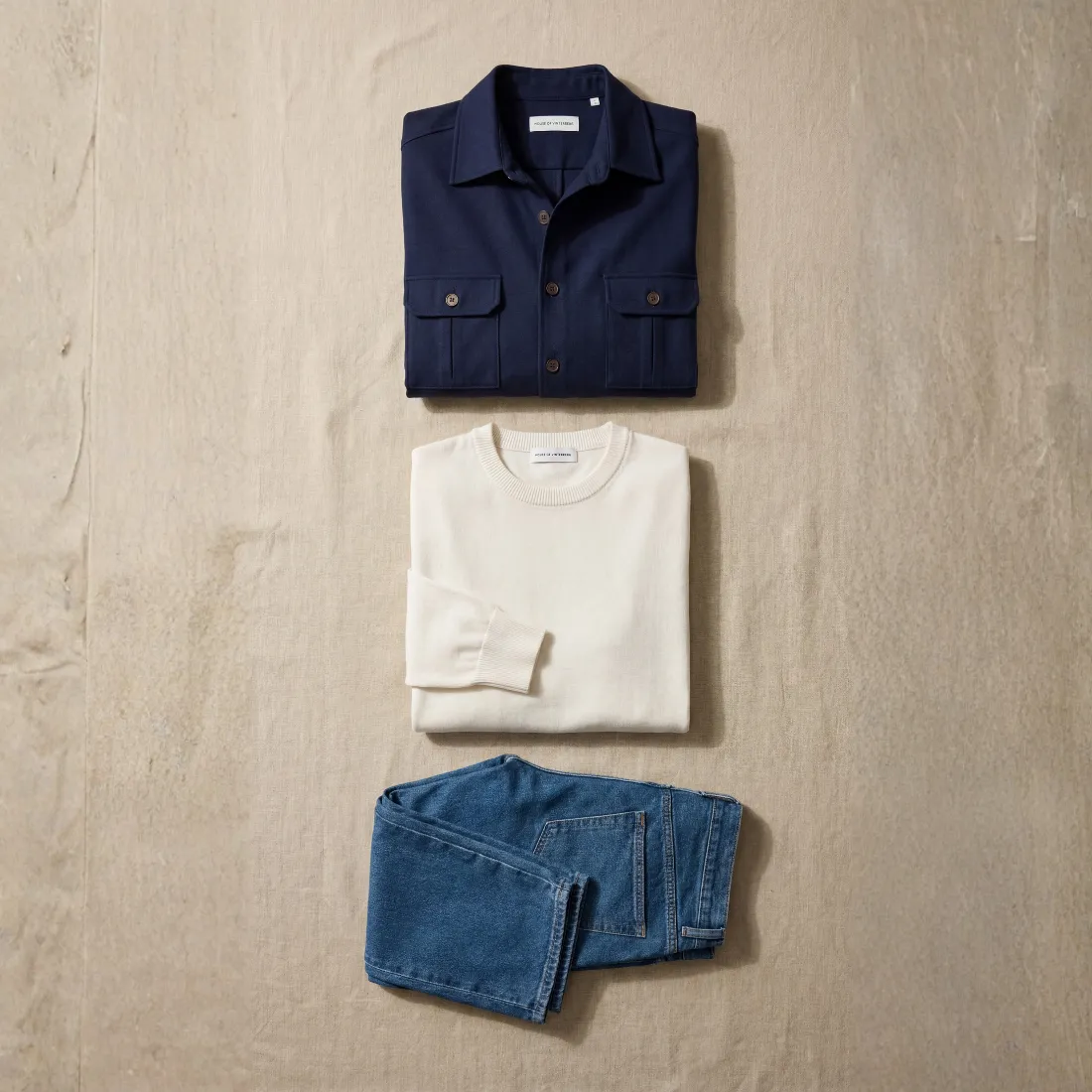
The crew-neck is the simplest and calmest silhouette. The round neck makes it the natural choice over a shirt, where the collar is allowed to stand, and under a blazer where the turtle-neck would be too much.
The V-neck opens up more and is drawn to be worn over a shirt and possibly a tie. It is the most classic of the four and particularly suits a wardrobe that leans formal.
What fine knit means
Knitwear is measured in gauge, the number of stitches per inch. The higher the gauge, the finer and denser the knit. House of Vinterberg's models are knitted in 14 gauge, which is fine knit. That gives a light, precise sweater with a smooth surface that works under a blazer without building volume, and that falls calmly when worn on its own.
Fine knit is also the reason a merino wool sweater can replace the shirt in more and more settings. It has the shirt's lightness with the knit's comfort.
Made in limited runs
The knitwear is made to our own design in limited runs. If your size is sold out, you can sign up on the product page and be notified when it is back in stock.
How the knit holds its shape
Merino wool asks for less than most people think, but what it asks for is the right things. Wash by hand and rarely, always dry flat, and fold the sweater rather than hanging it. We have gathered all the habits in our knitwear care guide, which is the best five-minute investment you can make in your new sweater.
Choose from the wardrobe you have
The right knit depends on what it will work with. If you mostly need a layer under the blazer, the crew-neck or the turtle-neck is the natural place to start. If the sweater must stand on its own, the polo is the strongest all-rounder. If in doubt, book an appointment at the Showroom in Copenhagen and talk it through with your personal designer. The conversation carries no obligation, and you leave with a choice that fits your wardrobe instead of a guess.
Read also

Talk it through with us at the Showroom.
Book a no-obligation appointment and get advice that starts from your occasion and your wardrobe.