The men's overcoat: a guide to outerwear that lasts
Learn about men's overcoats: styles, cloths, fit and wardrobe use. A guide to outerwear that lasts for many years.
Journal · Guide
The men's overcoat: a guide to outerwear that lasts
Learn about men's overcoats: styles, cloths, fit and wardrobe use. A guide to outerwear that lasts for many years.
House of Vinterberg · · 6 min read
A good overcoat is the first thing others notice, and often what they remember. It frames everything worn beneath it, and it follows you for years if chosen with care. This guide is about choosing a men's overcoat that lasts, in style, in cloth and in fit.
The coat as the wardrobe's frame
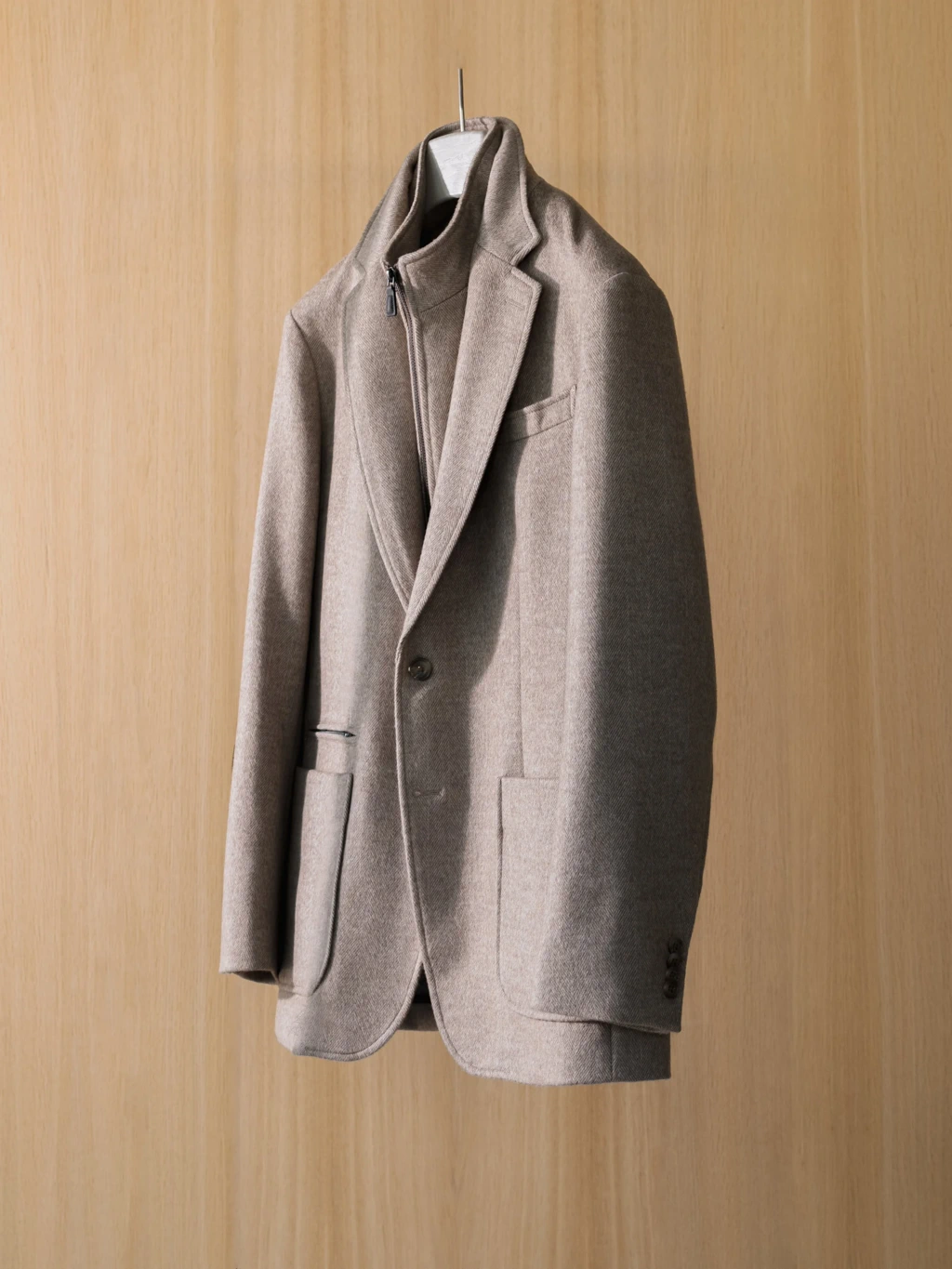
A considered overcoat is not seasonal merchandise. It works over the suit for a meeting, over knitwear at the weekend and over a more relaxed outfit on a Saturday. That versatility is what separates a considered purchase from an impulsive one. A coat in a classic cut and natural cloth moves without effort between seasons and occasions.
An overcoat is rarely bought every year. It should be chosen as if it will be worn every winter for ten.
The Scandinavian climate makes demands. Shifting temperatures, wind and rain call for cloths that work without the expression suffering. Rather than several cheap coats that lose their shape after a few seasons, the logic is simple: one solid piece of outerwear, chosen with care, serves its owner for many years.
The classic overcoat styles
Knowing the classic styles is the starting point for choosing well. Each has its silhouette and its place in the wardrobe. You will find our own models under outerwear.
The overcoat and the Chesterfield
The overcoat and the Chesterfield share a structured silhouette with clean lines and a length that typically falls to the knee. They are the most formal in the category and work for the office, meetings and evening engagements. They are best worn over a suit and are what most people picture as the classic men's coat.
The raglan coat
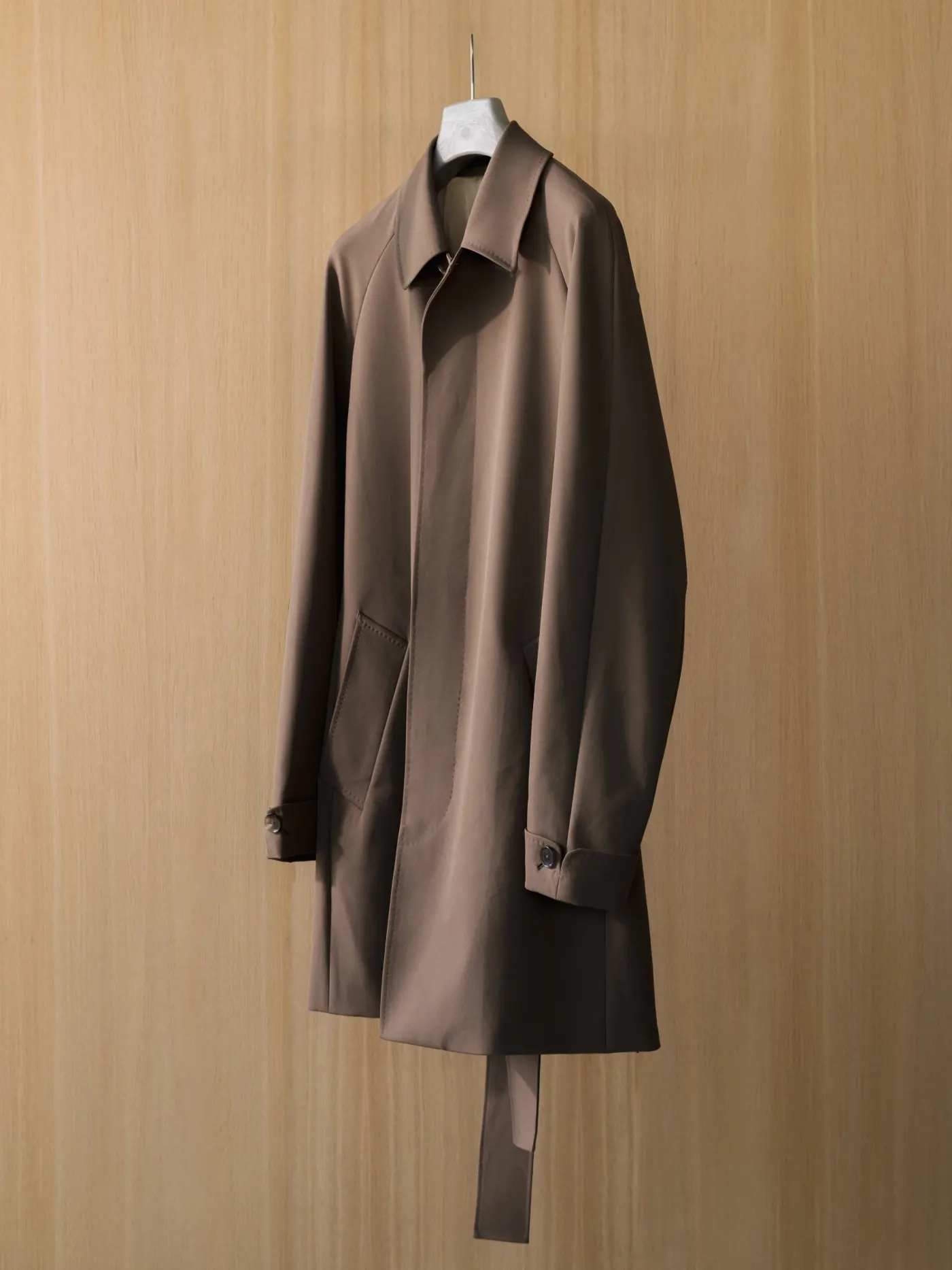
The raglan coat is recognised by the sleeve, sewn directly from the collar without a marked shoulder seam. That gives free movement and a slightly softer shoulder line. The style suits the man who wants classic form with practical comfort, and it works for both semi-formal wear and the everyday.
The trench coat
The trench coat is wind-resistant with well-judged proportions and one of the most versatile styles of all. In a Scandinavian context it is particularly good in autumn, when the weather shifts and the need for an outer layer that handles both wind and light rain is real.
Skjult knaplukning og bælte: en ren front uden synlige knapper.
For the relaxed wardrobe
For the more relaxed part of the wardrobe there are robust styles such as the field jacket, built for cold weather and daily use. They belong to weekends and the outdoors and should not be combined with formal clothing.
The choice of style should always start from what the coat is for, and what the wardrobe already contains. An overcoat only makes sense if the life it joins calls for one.
Cloths that last
The choice of cloth decides whether a coat lasts for many years or loses its shape after two seasons. Natural fibres behave differently from synthetics, both in use and with age.
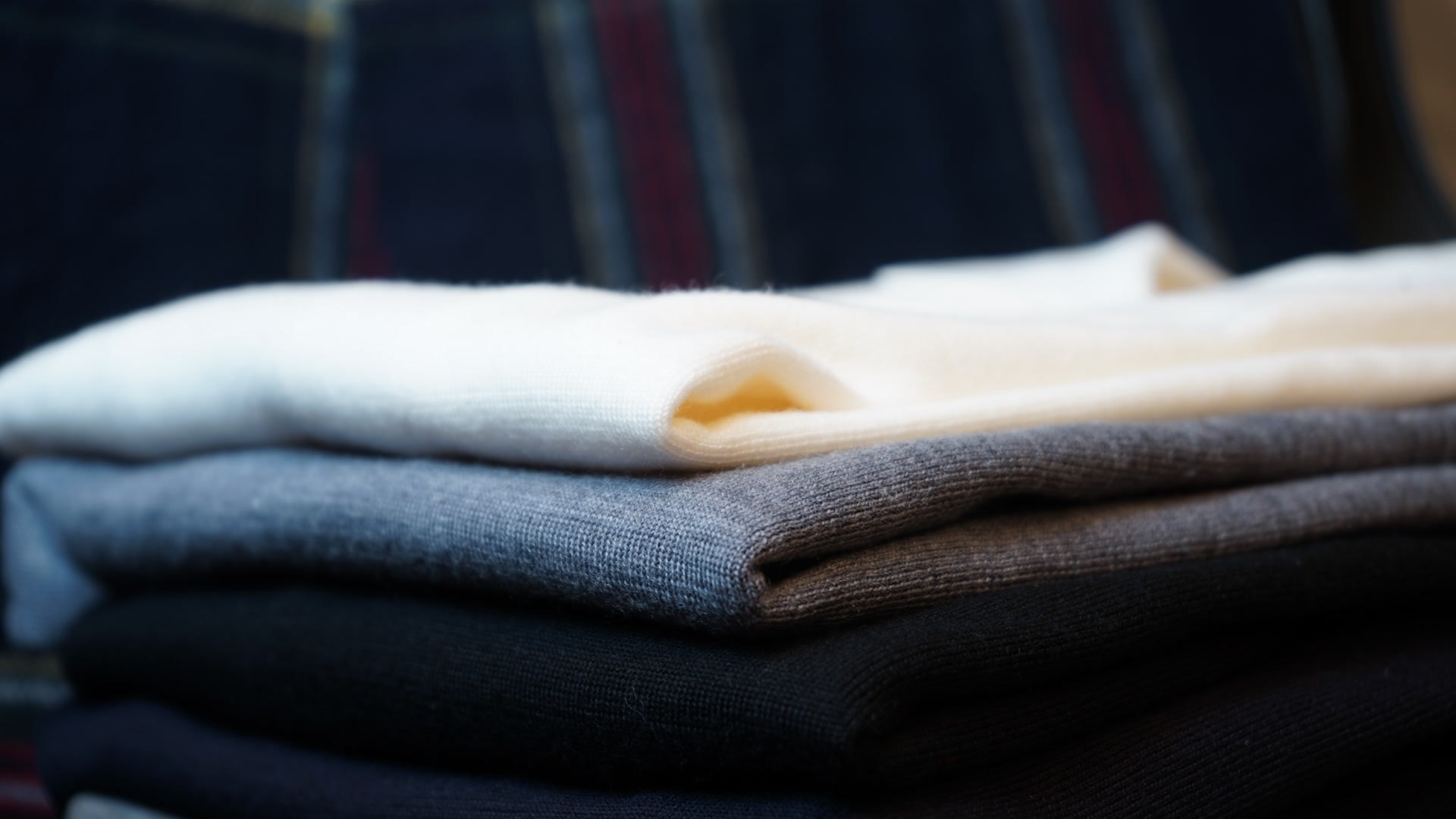
Virgin Wool is wool that has never before been processed into yarn. The fibres are long and intact, and outerwear in Virgin Wool has a natural drape and a weight that settles correctly from the first wear. Merino wool is finer and softer, well suited to lighter outerwear and middle layers. We cover the cloths in more depth in our universe on construction and textiles.
Wool regulates temperature and moisture in a way synthetic alternatives cannot imitate. It absorbs moisture without feeling wet and keeps the body in balance as the weather shifts through the day. And it holds its shape: a coat in good wool falls correctly from shoulder to hem and recovers its silhouette after wear without constant upkeep.
Fit and proportions
Fit is not taste, it is geometry. A coat that does not sit right never looks right, whatever the cloth.
The shoulder sets the whole coat. The shoulder seam should end precisely at the natural shoulder point. It is the hardest thing to change afterwards and therefore the first thing to check.
The sleeve should, when the coat is worn over a jacket, end so the jacket sleeve does not show. The length decides the expression: a coat to the knee or below is classic and formal, while a shorter length is lighter and more relaxed.
Finally, there must be room for what the coat is worn over. A coat meant for a suit needs space in the chest and back, without looking oversized over a thin sweater. That is precisely the balance ready-to-wear in standard sizes rarely strikes for the individual, because it is drawn from average measurements.
Outerwear cut for you
When a coat must sit right from the first day and last for many years, made-to-measure is the direct route. At the Showroom in Copenhagen you meet your personal designer for a no-obligation conversation built on three things: your measurements, your use and the wardrobe you already have.
Cloth, length, silhouette and details are chosen from the use the coat must cover. A man who wears his coat to work in the city has different needs from one who wants it for formal occasions or weekends in shifting weather. House of Vinterberg works with natural cloths and a clear philosophy: timeless qualities over seasonal trends.
The process includes a fitting along the way, so the outerwear is built around your body and your movement. Prices and cloths are always reviewed at the first meeting. You can book an appointment at the Showroom when you are ready.
Choose well from the start
A good overcoat gives the most back when it is chosen with care from the beginning. Style, cloth and fit work as one system, and the three are inseparable. A coat in a beautiful cloth that cuts wrongly across the shoulders never keeps its promise, and a perfect fit in a thin synthetic weave loses its shape after the first season.
Start with your own use: which occasions the coat must cover, which cloth suits the climate you move in, and which silhouette supports the wardrobe you have. If in doubt, book an appointment at the Showroom and talk it through with your personal designer, who helps strike the balance between style, proportion and cloth.