
How to tie a tie: six knots, step by step
A guide to the tie knots with photo and video: the simple knot, four-in-hand, half windsor and full windsor - plus the braided trinity and eldredge, the bow tie, the right length and the typical mistakes.
House of Vinterberg · · 5 min read
Most men get far with two knots, but the collar and the tie decide the choice, and a couple of the knots are a small art form of their own. Here are the four classics - the simple knot, the four-in-hand, the half windsor and the full windsor - plus the braided trinity and eldredge, and the bow tie for black tie. Each of the big knots is shown with a photo of the result and a video of the tying, and we start with the answer to the question most people actually have: how far down should the tie reach?
The right length first
The tip should hit the middle of the belt buckle, neither above nor below. Start with the wide end about a hand's width lower than you think - the knot eats more length than expected - and adjust the starting point after the first attempt instead of re-tightening.
Four-in-hand: the everyday knot
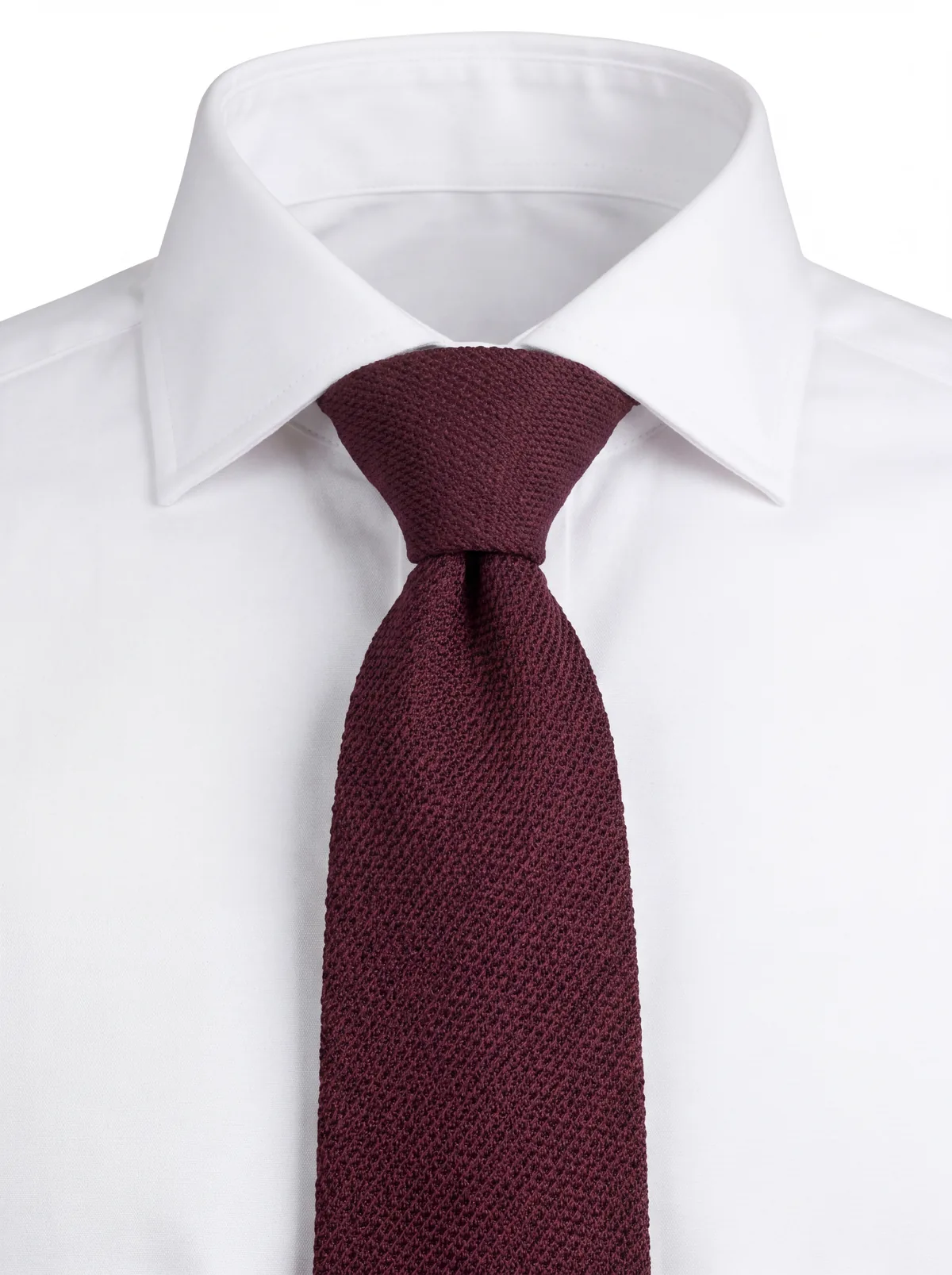
The four-in-hand is the everyday knot and the one most men learn first: small, slightly elongated and a touch askew - that is the point, and exactly what gives it an effortless look. It suits narrow and classic collars, flatters textured ties, and it is quick to tie and easy to undo. If you only know one knot, make it this one.
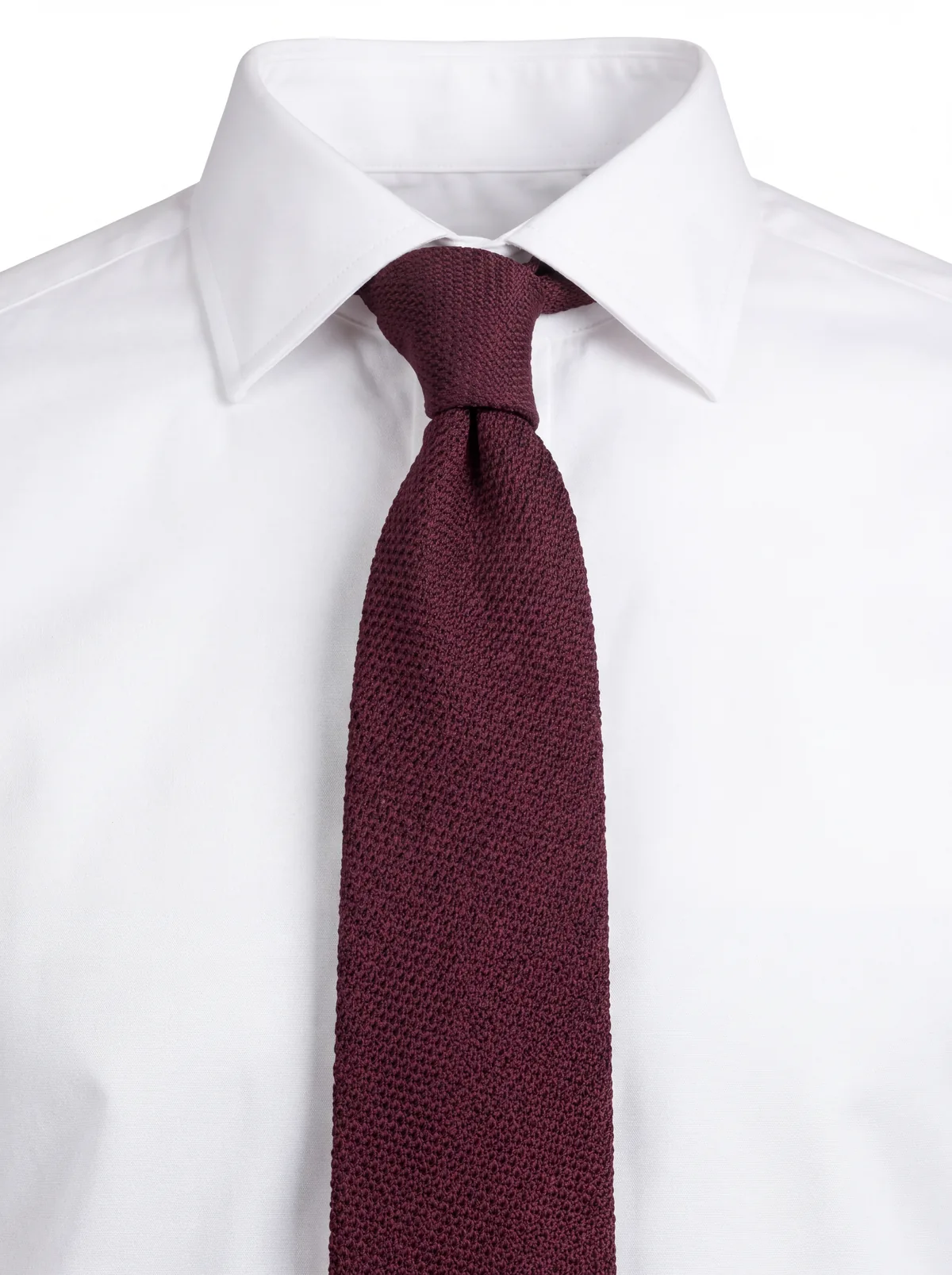
Half windsor: the formal triangle
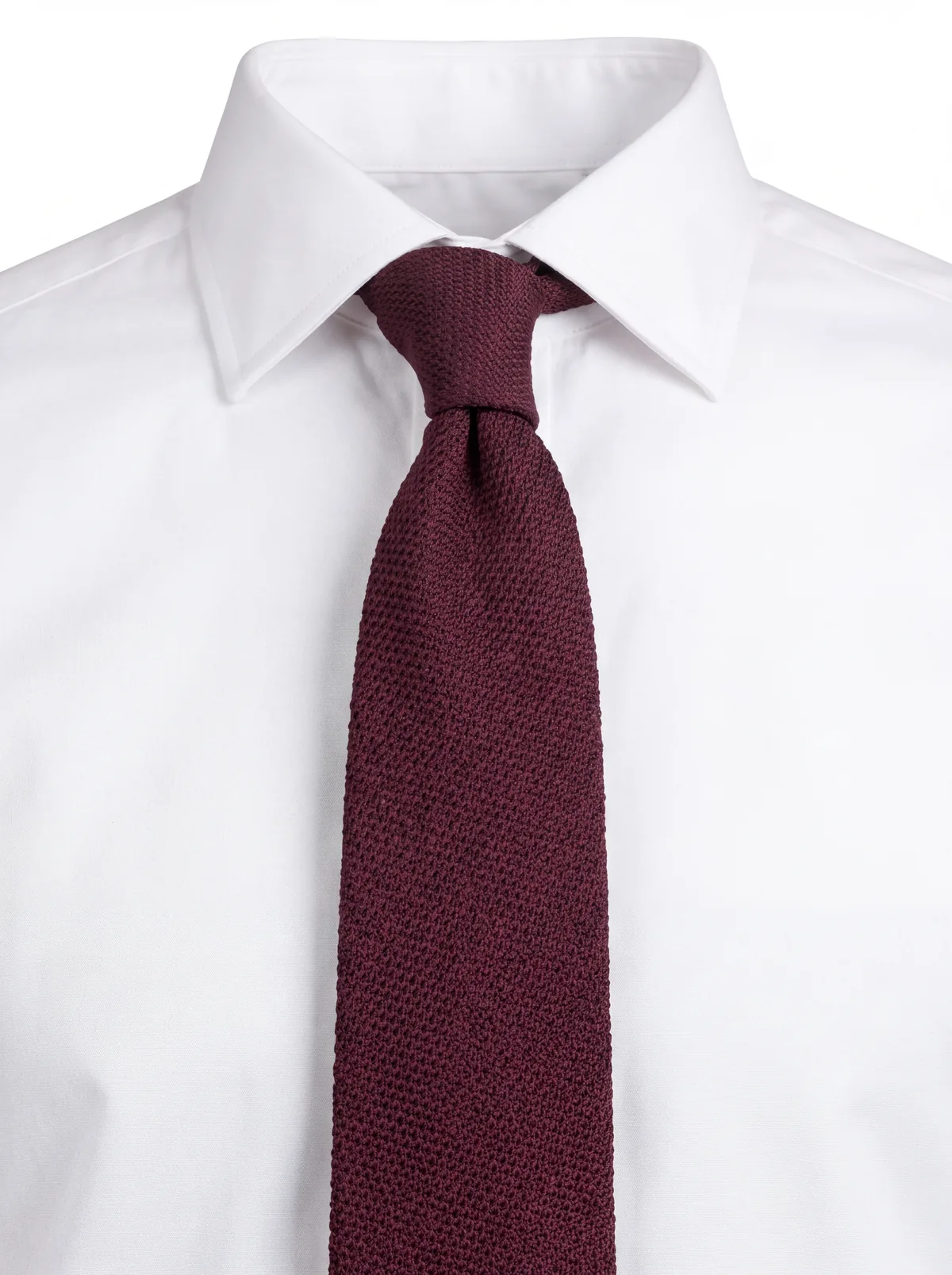
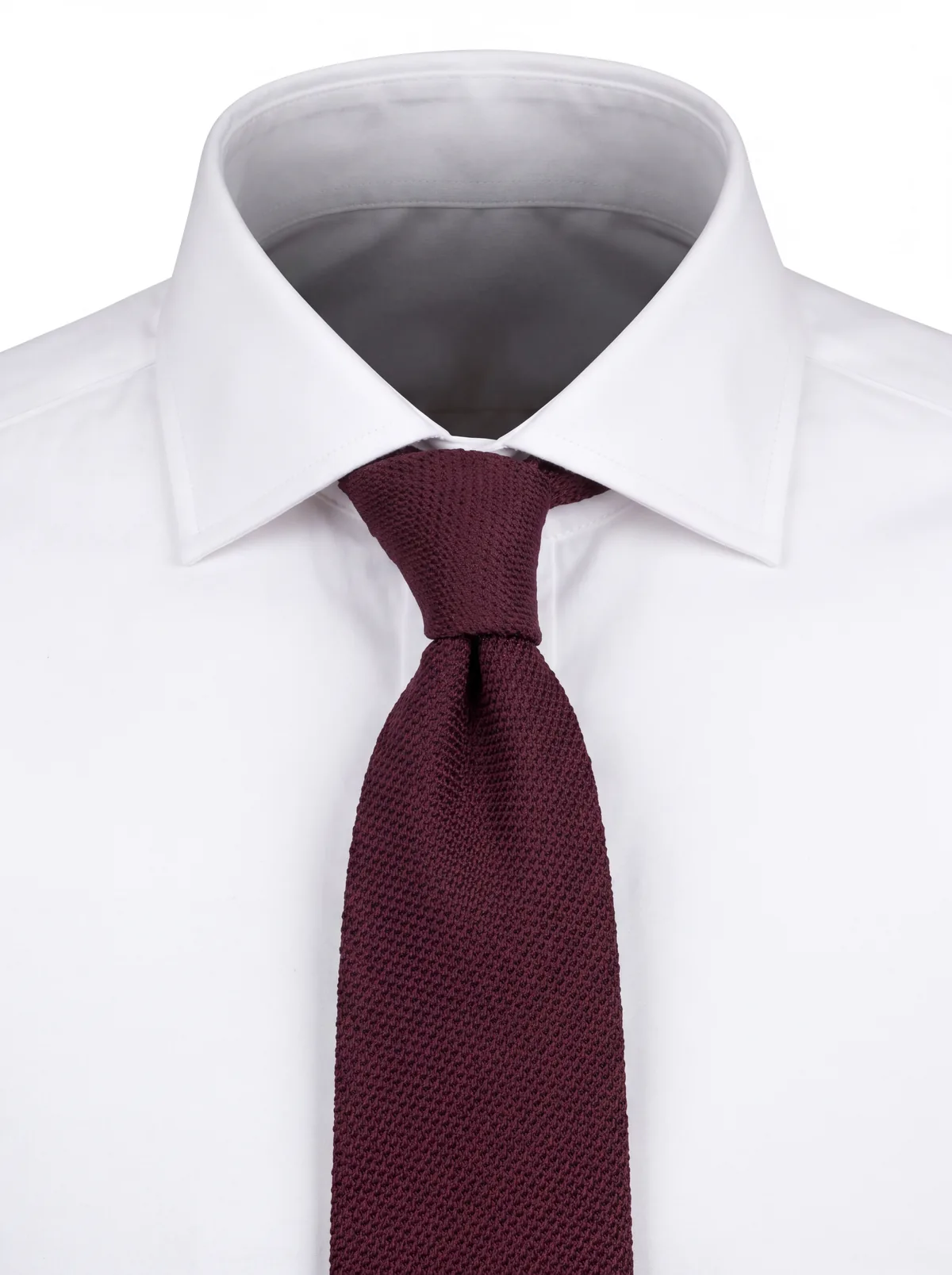
The half windsor is the symmetrical triangle between the four-in-hand and the full windsor: formal enough for meetings, weddings and photographs, but without the full windsor's bulk. It belongs with the classic collar, uses less of the tie's length than the full version, and for most men it is the best candidate for one knot that does everything.
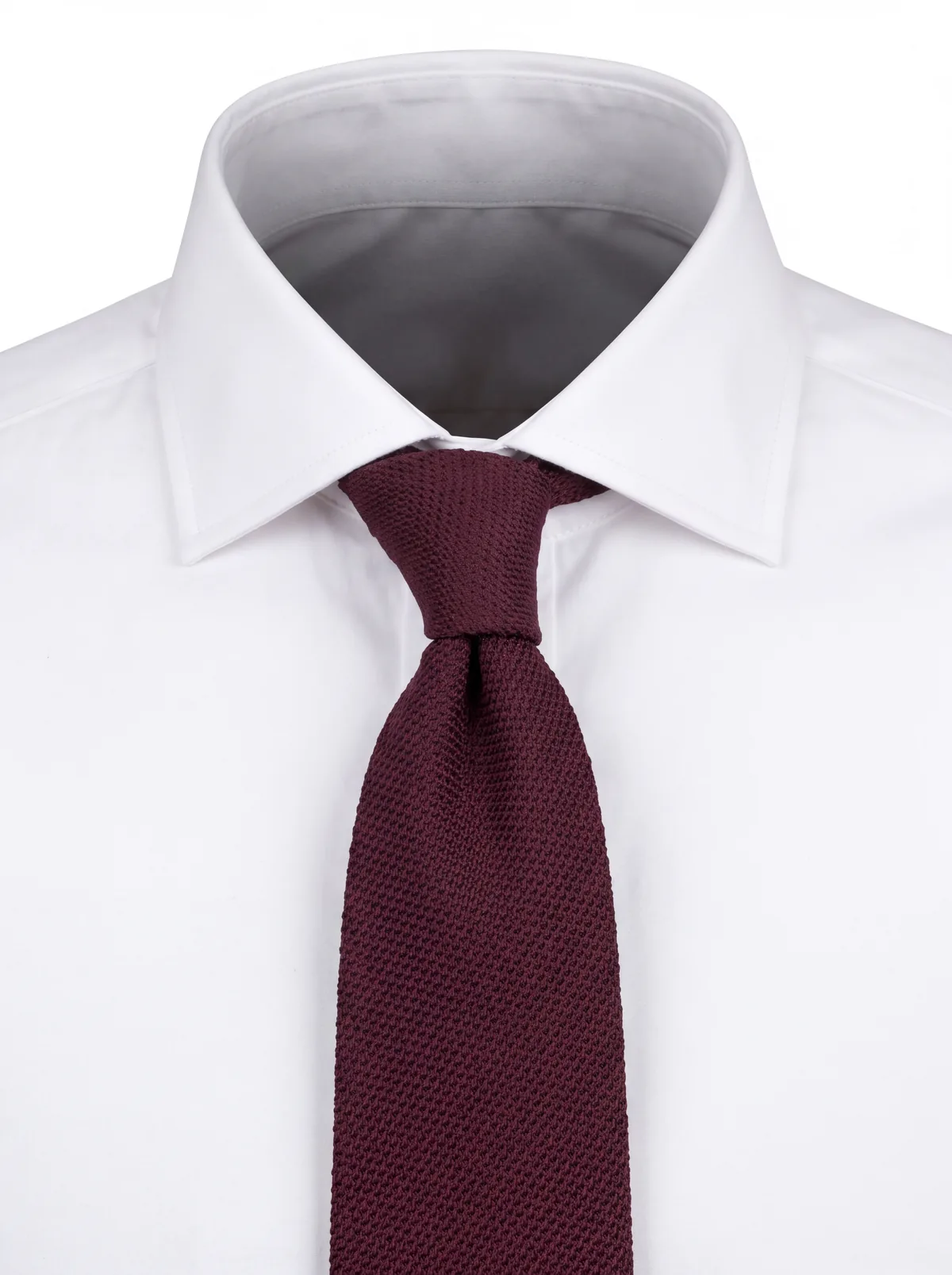
Full windsor: when the collar is wide
The full windsor is the widest and most formal of the classic knots: a large, dense, perfectly symmetrical triangle that fills a spread collar. It takes a few extra centimetres of the tie and a little more practice, and it is too massive for narrow collars - in return it sits immovably from morning to night.
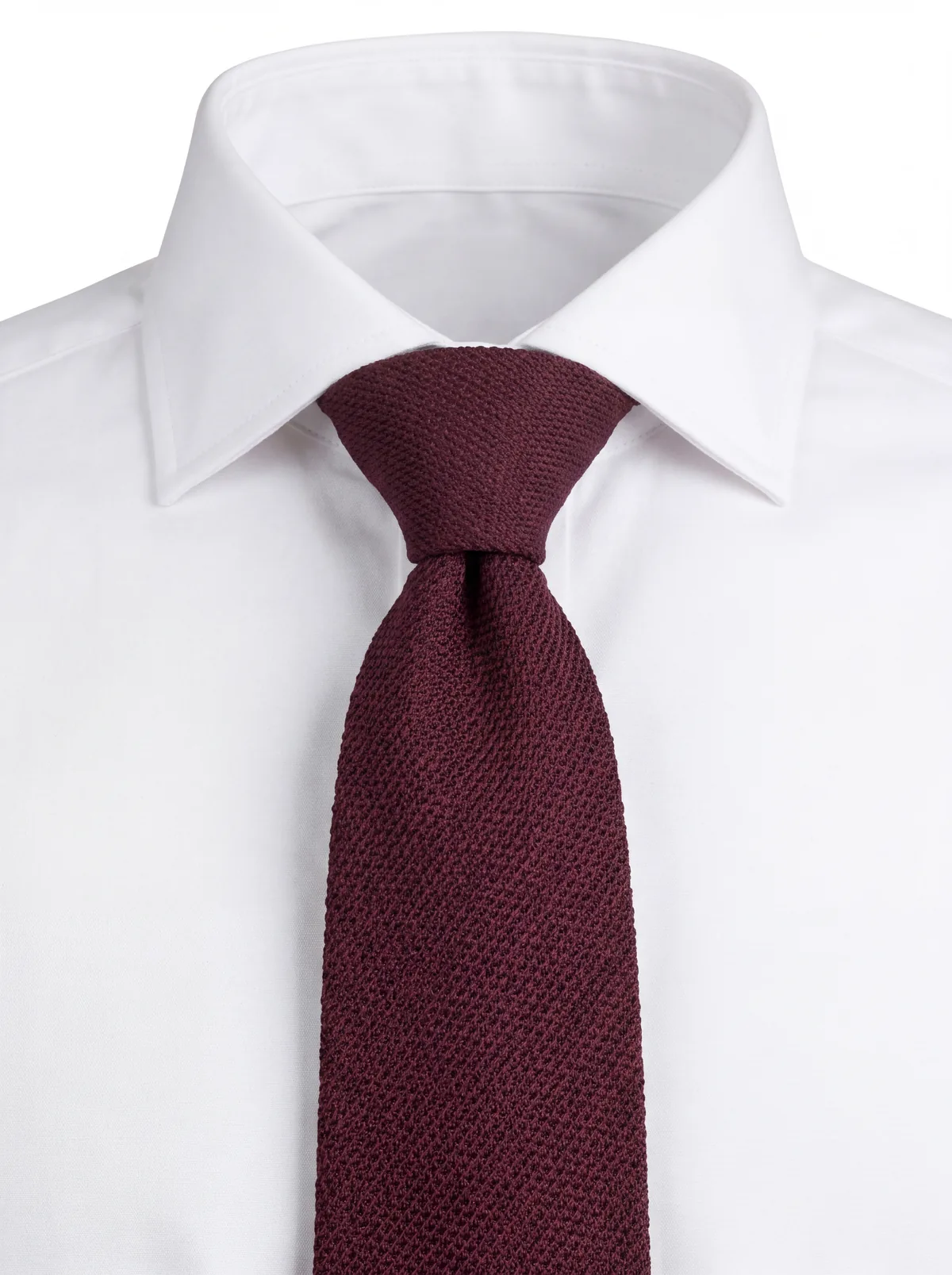
Which knot for which collar
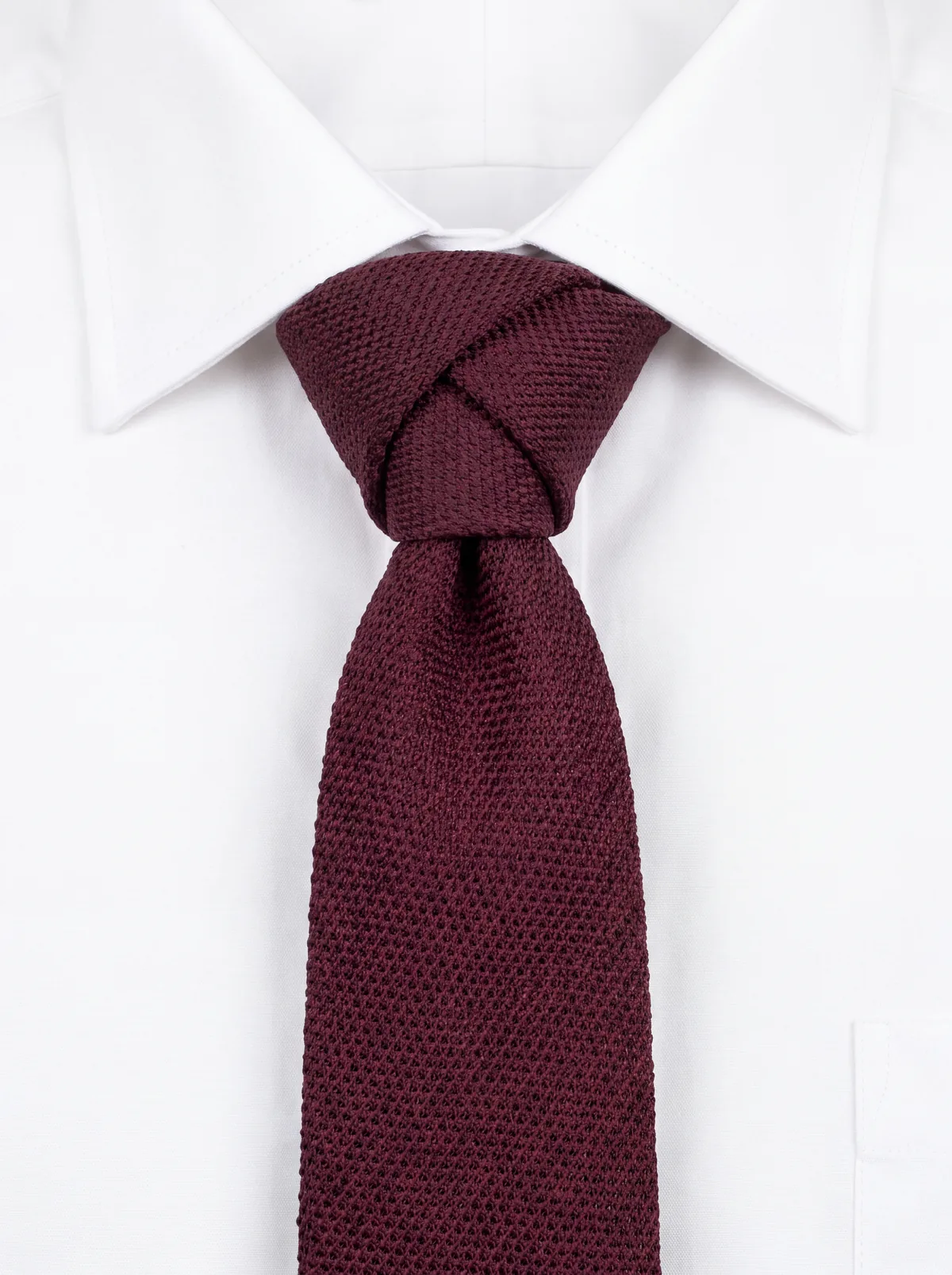
The rule of thumb is simple: the knot should fill the collar opening without bursting it. A narrow collar wants a four-in-hand or the simple knot, the classic collar carries a half windsor, and the spread collar is built for the full windsor. The tie's weight counts too - a heavily woven tie ties a size larger than you expect, so go one knot down when the cloth has weight.
Trinity: the braided triangle
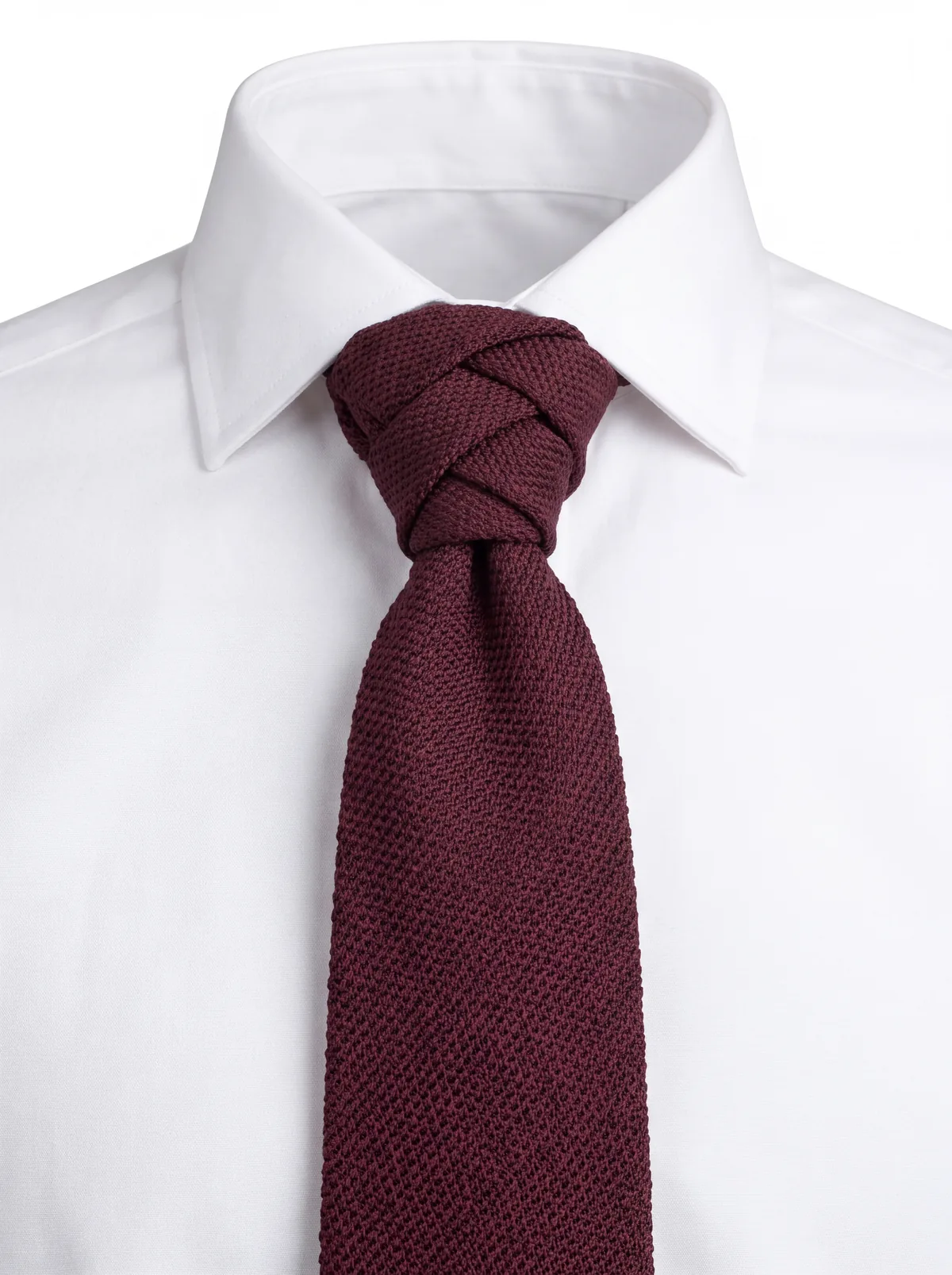
The trinity is a braided knot that turns the method upside down: the wide end rests at its final length, and all the braiding is done with the narrow one. The result is a triangular braid with three visible strands meeting at the centre - a knot people notice. It is easiest in a thin, smooth tie with good length and belongs to the party; for weddings and the boardroom, the classics still win.
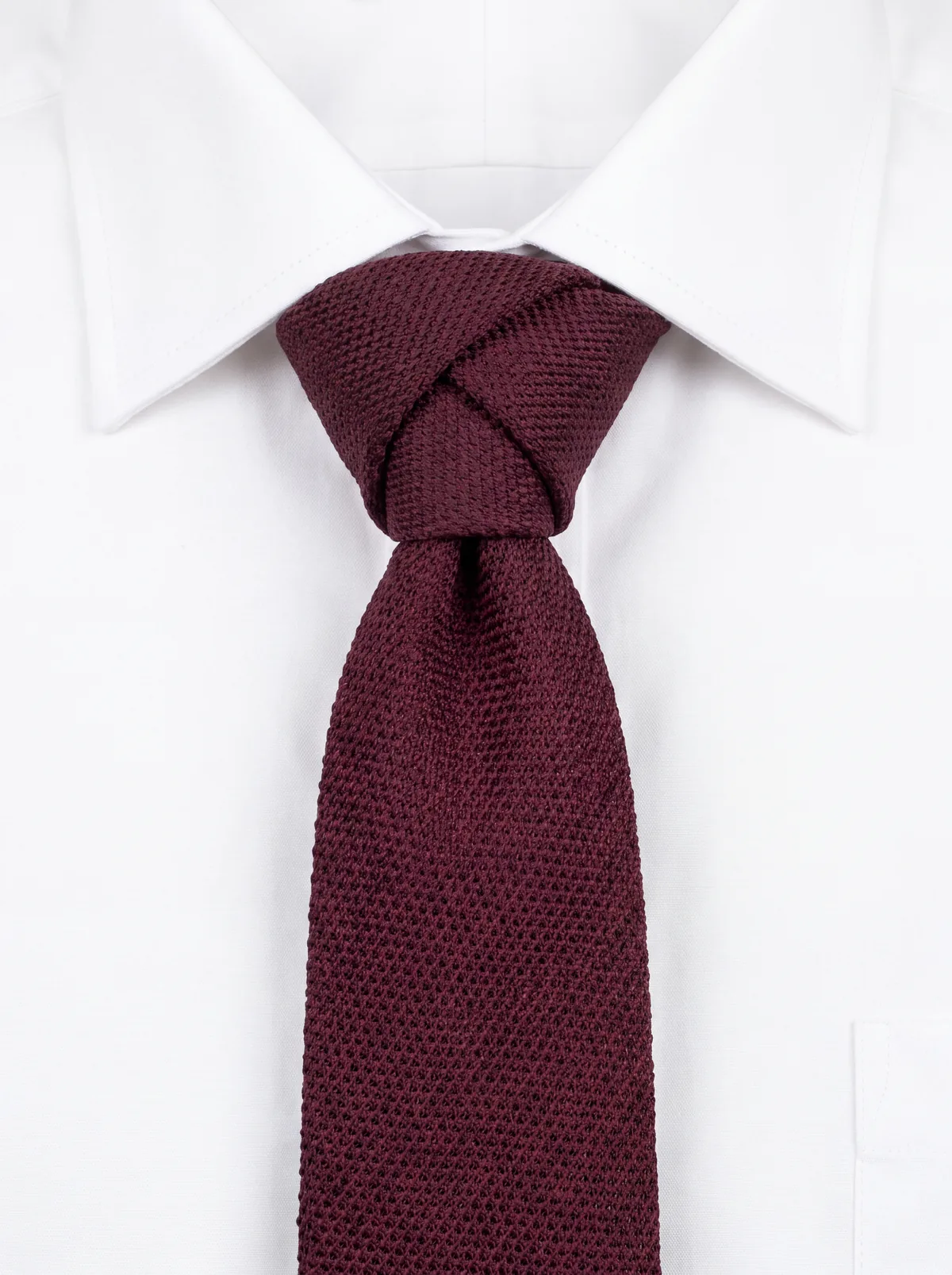
Eldredge: the full braid
The eldredge is the most advanced of them all: a layered herringbone pattern built from the bottom up with the narrow end while the wide one rests. The rest of the narrow end is tucked behind the neck loop at the end - that is part of the construction. A statement knot for the party and the patient; expect a few attempts in front of the mirror before the braid gathers.
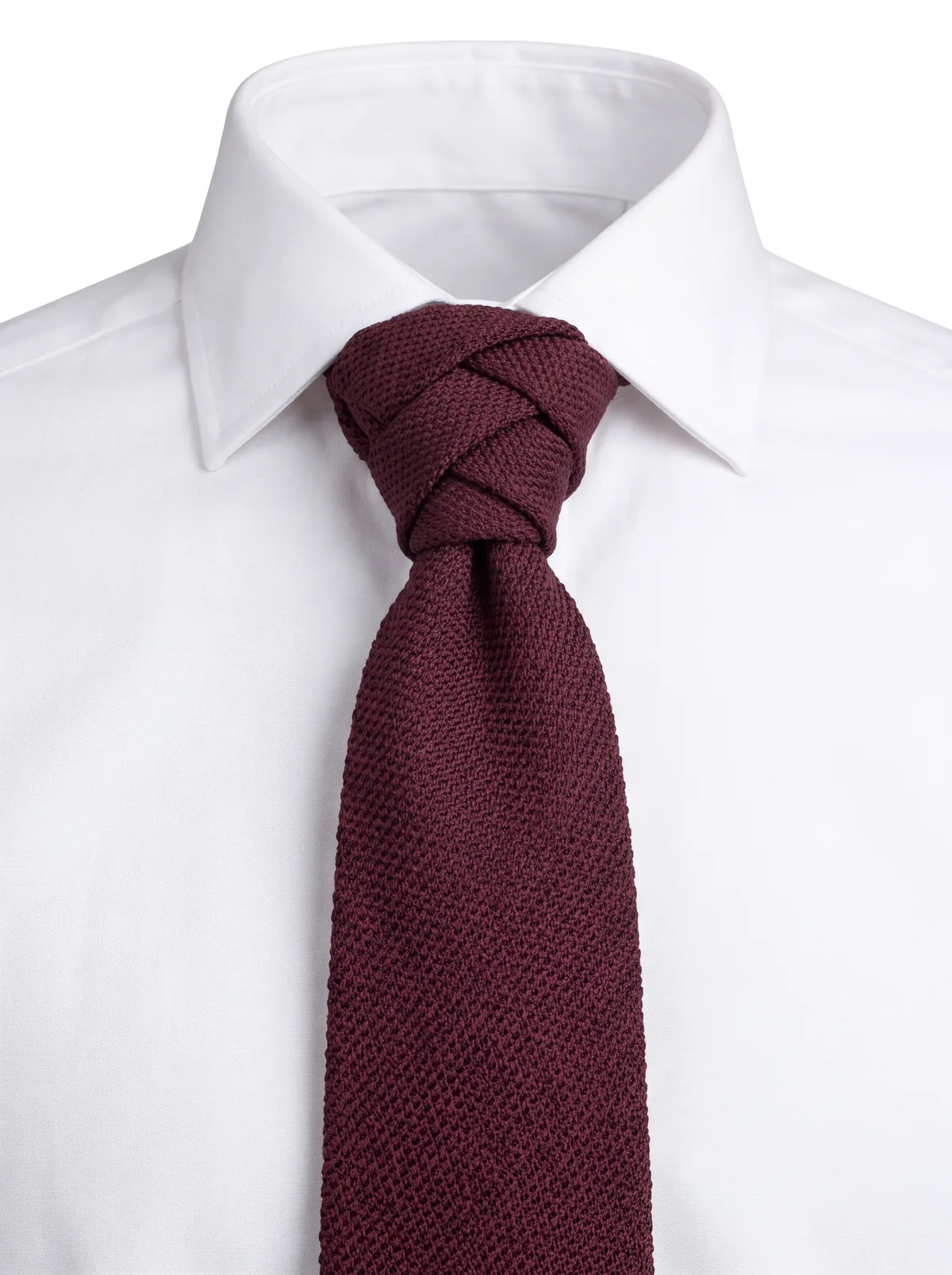
The simple knot: small and quick
The simple knot is the smallest of the classics and the right answer when the tie is thickly woven or the collar narrow. It is tied seam out: lay the tie around the neck with the seam facing up, bring the wide end under the narrow one, then once around, up through the neck loop and down through the front loop. Three movements, done. The knot is discreet and lets a heavy tie fall calmly where the larger knots would turn clumsy.
The bow tie: tie it yourself
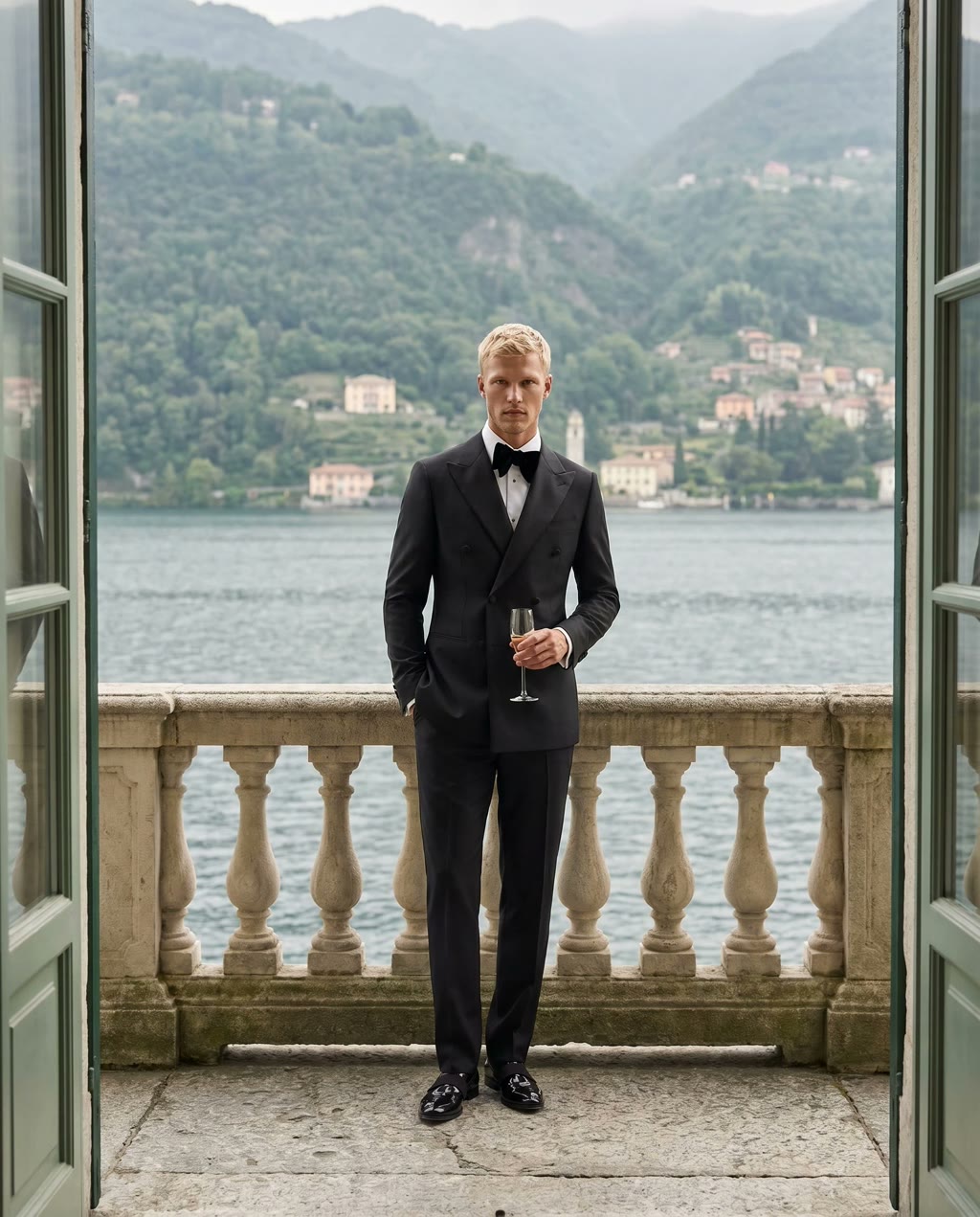
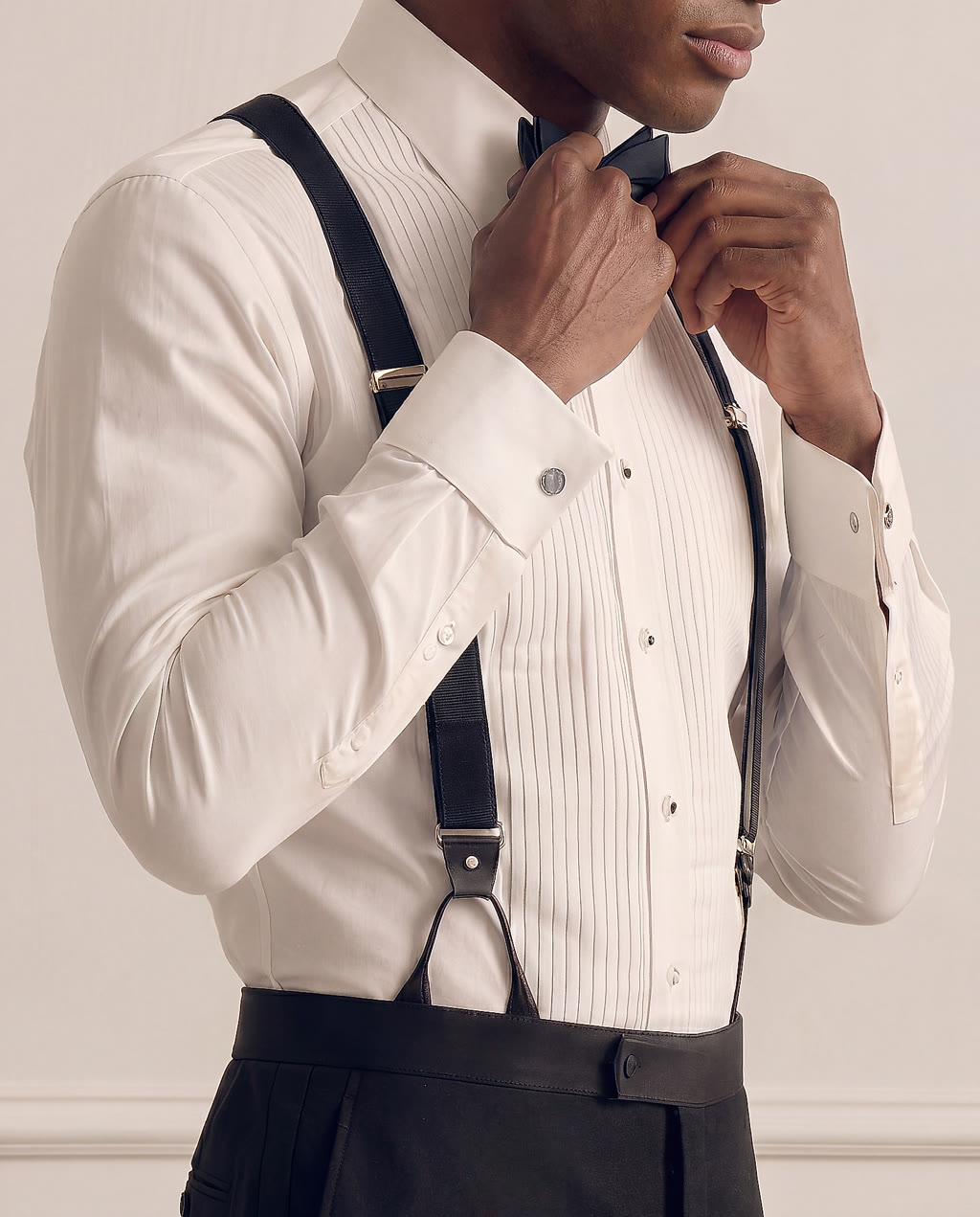
For black tie, the necktie has the night off, and the self-tied bow is the detail of the evening. It takes two minutes of practice in front of the mirror: lay the band around the neck with the left end about four centimetres longer, cross the long end over and up through the neck loop, fold the short end into the bow shape, let the long end fall over the centre, and push it, folded, through the loop behind the front bow. Tighten by pulling the folds. It is allowed to sit slightly alive - that is the proof it was tied by hand. Find yours among our silk bow ties.
The dimple: the detail that makes the difference
Place an index finger under the knot as you tighten, so the cloth folds into a small depression just below the knot. The dimple gives the tie fall and life, and it is the whole difference between tied and well dressed.
The three typical mistakes
The wrong length, a knot that does not match the width of the collar, and a tie pulled so hard the silk loses its drape. Choose the knot by the collar rather than the other way round, and let the material work: a handmade silk tie holds a clean, firm knot in a way machine-made ties do not. If the colour is still open, start with our tie and suit colour guide.
Frequently asked questions
- Which tie knot is the easiest?
- The four-in-hand. Few movements, hard to get wrong, and it suits most collars and occasions. If the tie is thickly woven, the simple knot is even quicker and gives a smaller knot.
- How long should a tie be?
- The tip should hit the middle of the belt buckle when you stand naturally. If it lands wrong, move the starting point of the wide end instead of re-tying the knot harder.
- How do you tie a full windsor?
- The full windsor runs up through the neck loop on both sides of the knot before the wide end goes through the front loop. It needs extra length and a wide collar to sit in - the video in the guide shows the whole tie.
- Which knot fits my collar?
- Narrow collar: four-in-hand or the simple knot. Classic collar: half windsor. Spread collar: full windsor. The knot should fill the collar opening without bursting it.
- What are the trinity and eldredge knots?
- Braided knots where the wide end rests and the narrow end does all the work. The trinity gives a triangular braid, the eldredge a layered herringbone. They need a long, thin tie and belong to the party - the videos in the guide show both.
- How do you tie a bow tie?
- Lay the band around the neck with one end about four centimetres longer, cross the long end over and up through the neck loop, fold the short end into the bow shape, let the long end fall over the centre, and push it folded through the loop behind. Tighten by pulling both folds.
- Which knot for a wedding?
- The half windsor. The symmetry suits photographs, and the knot fits most collars. For black tie, a bow tie is tied instead.

Talk it through with us at the Showroom.
Book a no-obligation appointment and get advice that starts from your occasion and your wardrobe.