
The men's dress code guide: black tie, weddings and the codes that matter
What the main dress codes mean for men: black tie, black tie optional, wedding guest, business, cocktail, and what to wear when no code is stated.
House of Vinterberg · · 3 min read
A dress code is not a rule for its own sake but a help: it tells you what is expected, so you can turn up dressed correctly without guessing. This guide covers the codes a man most often meets, from black tie to weddings and the everyday office, and what each one actually means.
Black tie
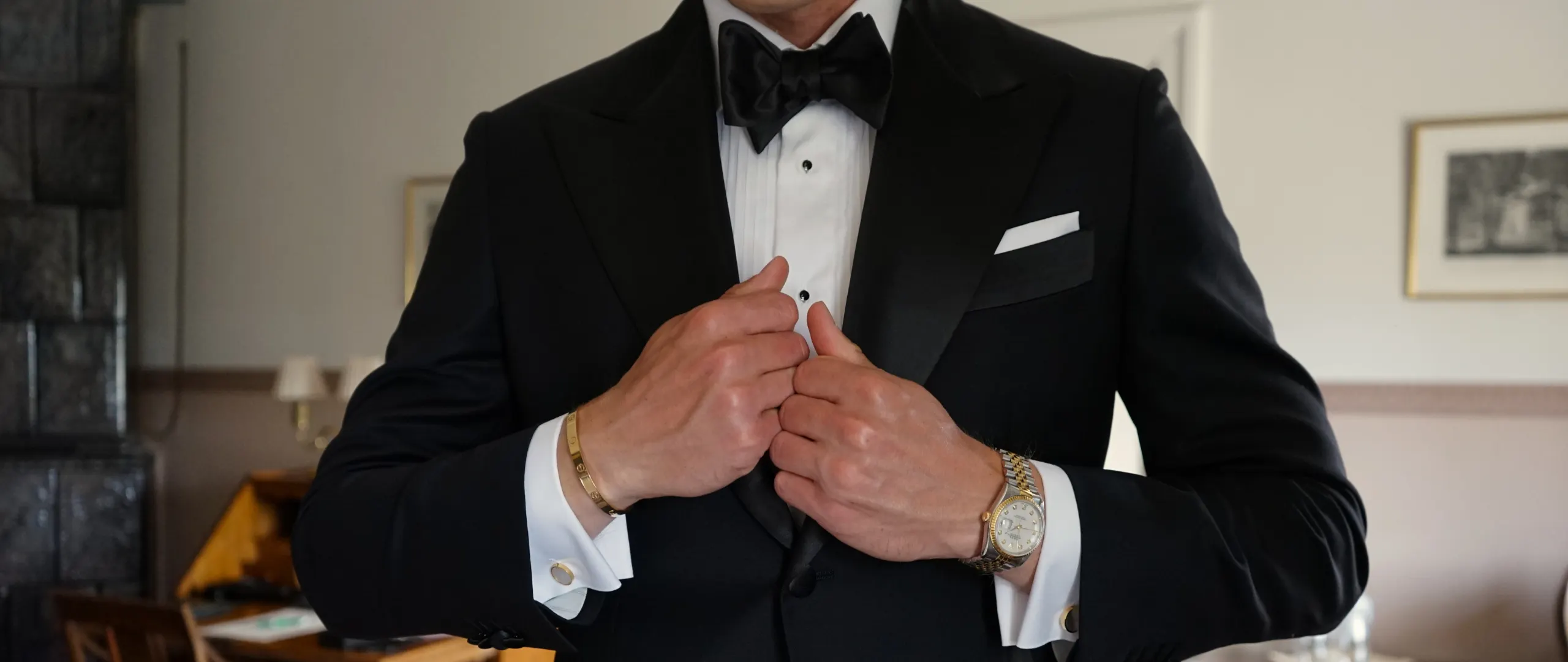
Black tie means a tuxedo. That is a black or midnight blue dinner jacket with a silk shawl or peak lapel, black trousers with a silk stripe, a white dress shirt, a black bow tie and black patent shoes. A midnight blue tuxedo often reads darker and more elegant than black under artificial light. Black tie is the most formal code you normally meet, and it belongs to galas, premieres and evening weddings.
Black tie optional
Black tie optional means a tuxedo is welcome but not required. If you own a tuxedo, it is a safe choice. Otherwise, wear a dark suit, ideally navy or charcoal, with a white shirt and a discreet tie. The aim is to meet the formal tone of the evening, whichever of the two routes you take.
The wedding guest
At a wedding you follow the tone of the day and whatever the couple has asked for. If nothing is stated, a dark wool suit is a safe starting point for most ceremonies, while a lighter suit or linen suits a summer or garden wedding. Avoid all black, which leans towards a funeral, unless the day is decidedly formal, and let the couple be the ones who stand out. We go deeper in our guide to the wedding suit.
Confirmations, celebrations and gala dinners
A confirmation or an ordinary celebration allows more colour and lightness than a gala dinner. Here a suit in a neutral or light colour with a shirt and possibly a tie works well. A gala dinner leans dark and formal, often close to black tie, so choose a dark suit or a tuxedo if the invitation calls for it.
Business and business casual
Business means a dark suit, a white or light blue shirt and a tie. Neutral, correct and calm, for meetings and representation. Business casual is a step down: the suit jacket over a shirt without a tie, or a blazer with smart trousers. The fit carries the expression once the tie is gone.
Cocktail
Cocktail sits between the formal and the relaxed, typically for receptions and afternoon parties. A dark or mid-tone suit with a shirt, with or without a tie, meets the code. There is room here for a personal detail such as a pocket square or a slightly more expressive cloth.
When no code is stated
If no dress code is given, dress for the occasion and the venue. A well-fitting dark suit is rarely wrong, and it is easier to dress down with an open collar than to dress up from too casual. When in doubt, it is better to be a touch too smart than too loose.
Meet the code with a suit that fits
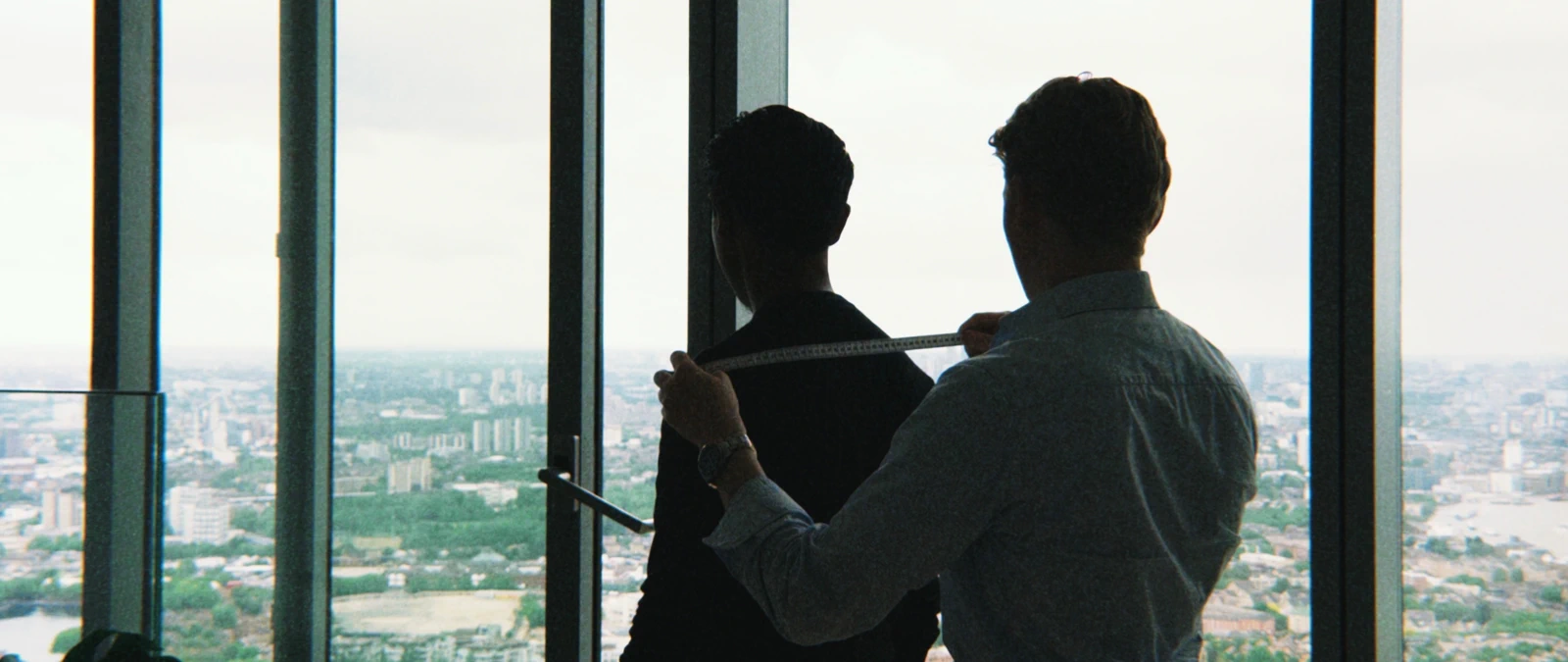
A dress code becomes easy when the wardrobe holds the right pieces: a dark suit, a tuxedo for the formal, and a lighter suit for the brighter months. To go through it, you can meet your personal designer at the Showroom in Copenhagen, see our suits and tuxedos, or read about tailor-made suits. Book an appointment when you are ready.
Frequently asked questions
- What does black tie mean?
- Black tie means a tuxedo: black or midnight blue with satin lapels, a white tuxedo shirt, a black bow tie and black patent or highly polished shoes. An ordinary suit does not meet the code, however dark it is.
- What does black tie optional mean?
- The host hopes for a tuxedo but does not require one. The tuxedo is the safest choice; the alternative is a dark, formal suit with a white shirt and a discreet tie. The code is an invitation to dress up, not a test.
- What is the dress code as a wedding guest?
- Follow the invitation if a code is stated. If not, a dark suit with shirt and tie is the safe choice for the ceremony and the reception. Light suits belong at daytime and summer weddings, and as a guest you avoid outdoing the groom in formality.
- What do you wear when the invitation does not mention a dress code?
- Read the occasion, the time and the venue. In the evening and at seated dinners you choose a suit; in the daytime and in informal settings a blazer and smart trousers can carry it. It is easier to take the tie off than to be missing it.
- What is the difference between a tuxedo and a suit?
- The tuxedo has satin lapels and is worn with a bow tie, a white tuxedo shirt and black patent shoes - it belongs to the formal codes of the evening. The suit is versatile, worn with a tie or an open collar, and can be used again for both celebration and work.
Read also
Talk it through with us at the Showroom.
Book a no-obligation appointment and get advice that starts from your occasion and your wardrobe.