
The suit glossary: lapels, cloth and the words worth knowing
A glossary of suit terms: lapel types, Super 110s and 130s, full canvas vs fused, patterns, and dress codes like black tie, explained simply.
House of Vinterberg · · 4 min read
A suit has a language of its own. Words like lapel, canvas and Super 120s come up when you have to choose, and they stand for real differences in fit, quality and expression. This glossary gathers the most important terms, so you know what you are choosing and why it matters.
Cut and fit
Shoulder. The suit's most important point. When the shoulder seam sits precisely at the natural shoulder point, the rest of the jacket falls naturally. The shoulder is the hardest thing to change afterwards, and therefore the first to get right.
Natural shoulder. A soft, lightly padded shoulder that follows the body's own line and gives a calm, classic expression rather than a sharp, constructed shoulder.
Waist suppression. How much the jacket is taken in at the waist. Marked suppression gives a shaped silhouette, light suppression a more relaxed cut.
Length. A jacket of the right length covers the seat and balances torso and legs. Too short reads as passing fashion, too long weighs the silhouette down.
Lapels and buttons
Notch lapel. The most common and versatile lapel, with a small notch where collar and lapel meet. Suits everyday wear, work and most occasions.
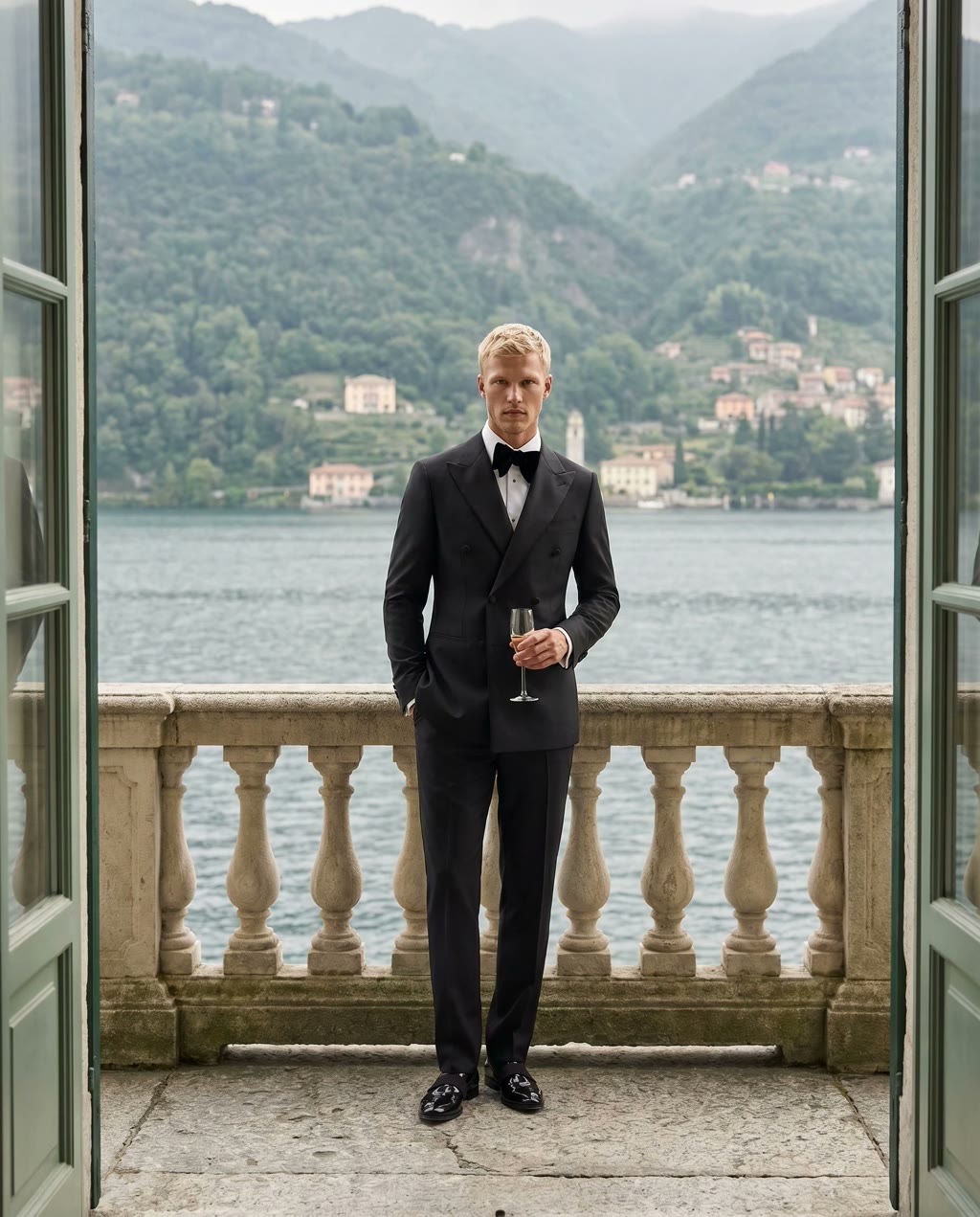
Peak lapel. A lapel whose points angle upward. More formal and pronounced, classic on double-breasted suits and the tuxedo.
Shawl lapel. A soft, unbroken, rounded lapel with no notch. Belongs to the tuxedo and formal evening wear.
Single-breasted. A suit with one row of buttons. The most versatile and widespread, from everyday to celebration.
Double-breasted. A suit with two rows of buttons and an overlapping front. More formal and pronounced, worn buttoned.
Cloth and quality
Super number (Super 110s, 120s, 130s). A measure of the wool fibre's fineness. The higher the number, the finer and softer the yarn and the smoother the surface. A higher number is not necessarily more durable: very fine cloths are more delicate and best suited to occasional wear, while 110s and 120s are robust everyday choices.
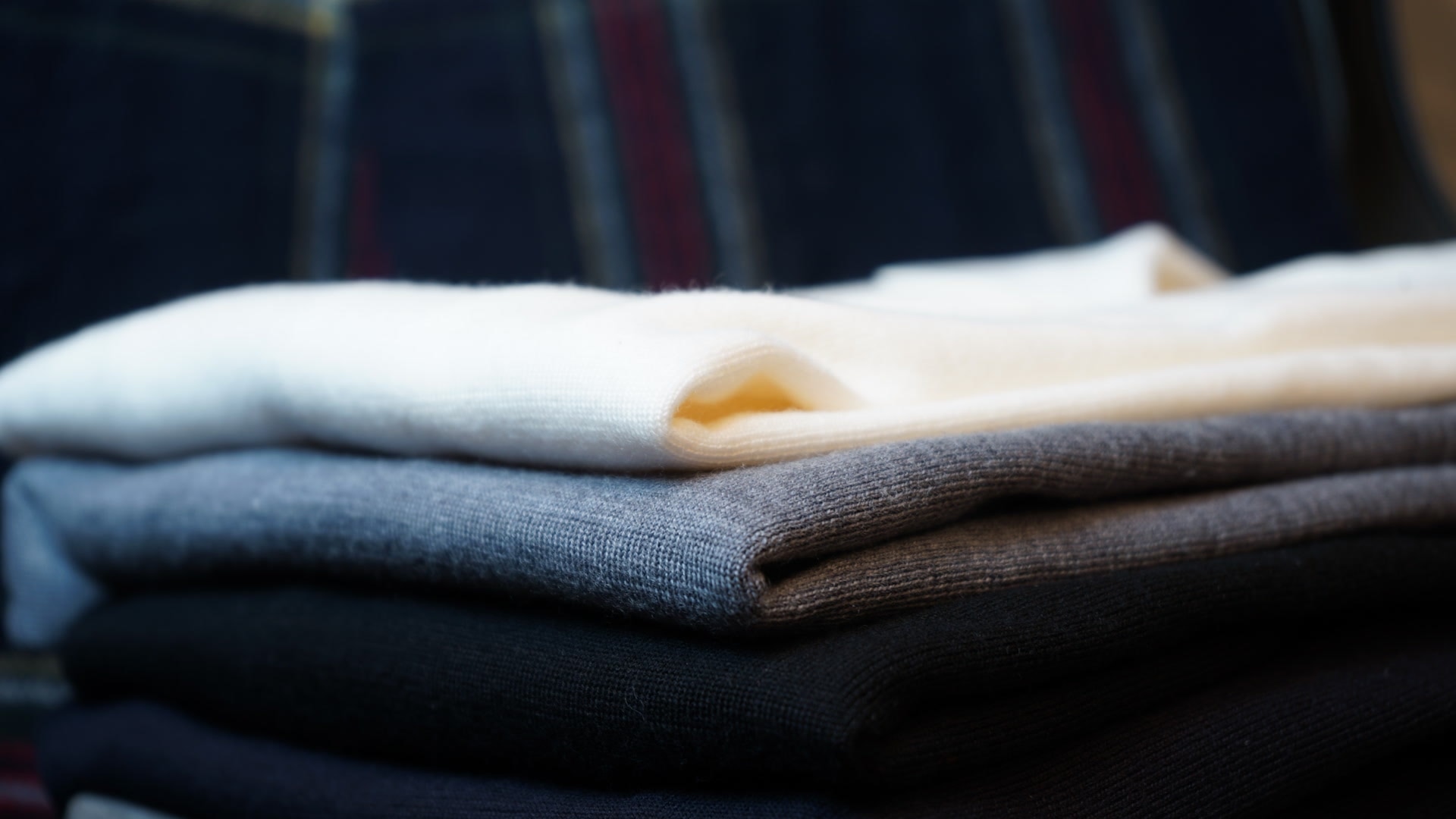
Merino wool. Wool from the merino sheep, with finer fibres than ordinary wool. It regulates temperature, resists creasing and feels soft against the skin.
Virgin Wool. Wool that has never before been processed into yarn. Longer, intact fibres give a finer, more even surface and a natural weight in the drape.
Worsted. Smooth, tightly combed wool with a clear surface. The classic suiting cloth, elegant and durable.
Flannel. Softer, lightly brushed wool with a matte surface. Warmer and more muted, belonging to autumn and winter.
Linen. A light, breathable natural material for summer. It creases easily, which is part of its character.
Weight. The cloth's heft, measured in grams per metre. Light cloths are for the warm months, heavier ones for winter. Weight decides how the suit falls and which season it can handle.
Construction
Canvas (interlining). A layer between cloth and lining that gives the jacket its shape. A jacket with canvas moulds to the body over time.
Full canvas. Canvas through the whole front. The most durable construction, giving the best drape and the longest life.
Half canvas. Canvas in the upper part of the jacket. A balance between quality and price.
Fused. Interlining glued to the cloth rather than sewn. Cheaper, but it can lose shape over time.
Patterns
Pinstripe. Thin, light stripes on a dark ground. Classic and formal, often for business.
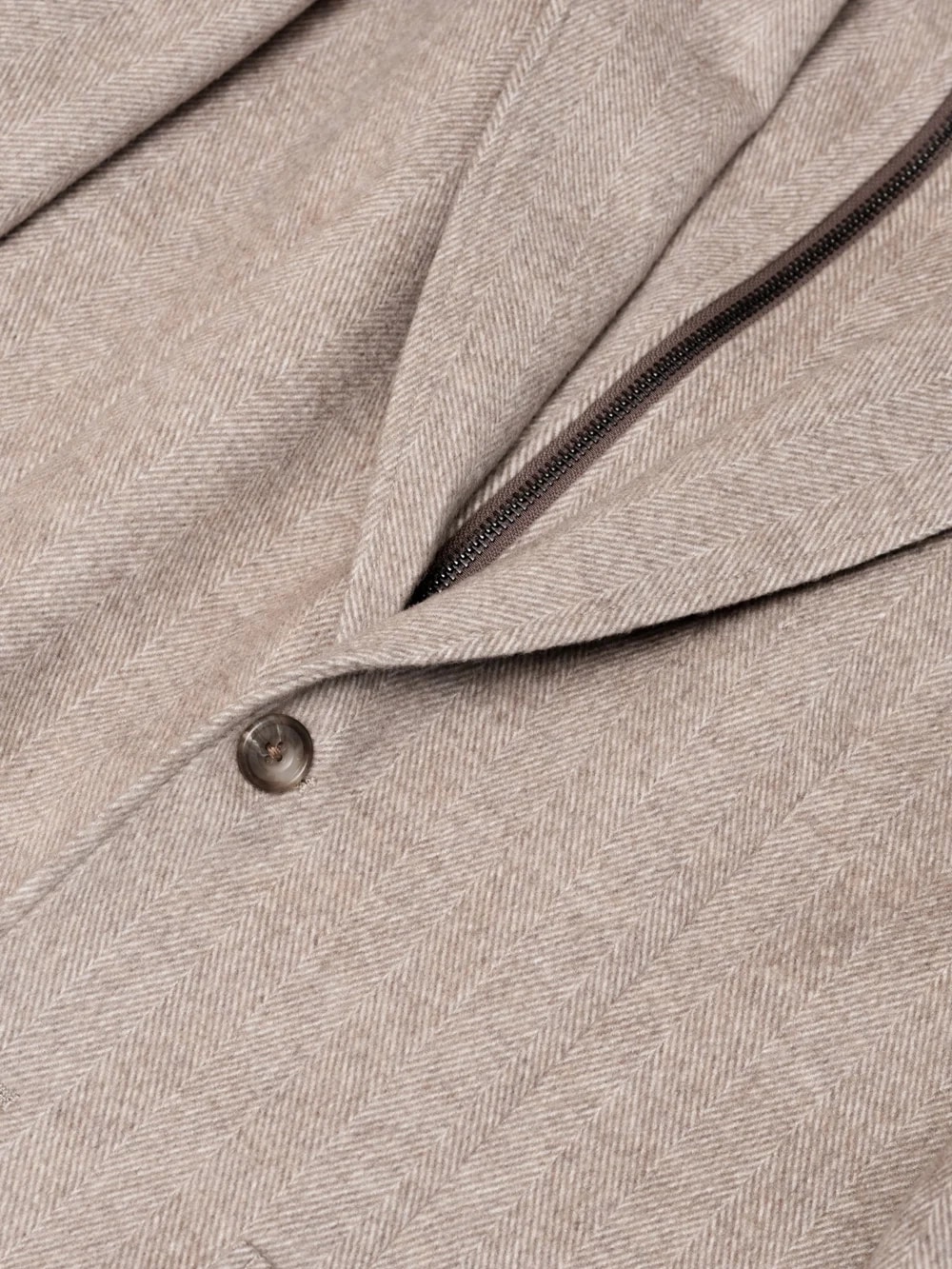
Herringbone. A V-shaped weave that gives a discreet texture. Versatile and elegant.
Houndstooth. A broken checked pattern. Pronounced and classic, often in wool for autumn.
Glen check. A larger, soft checked pattern. British and quietly elegant.
Dress codes
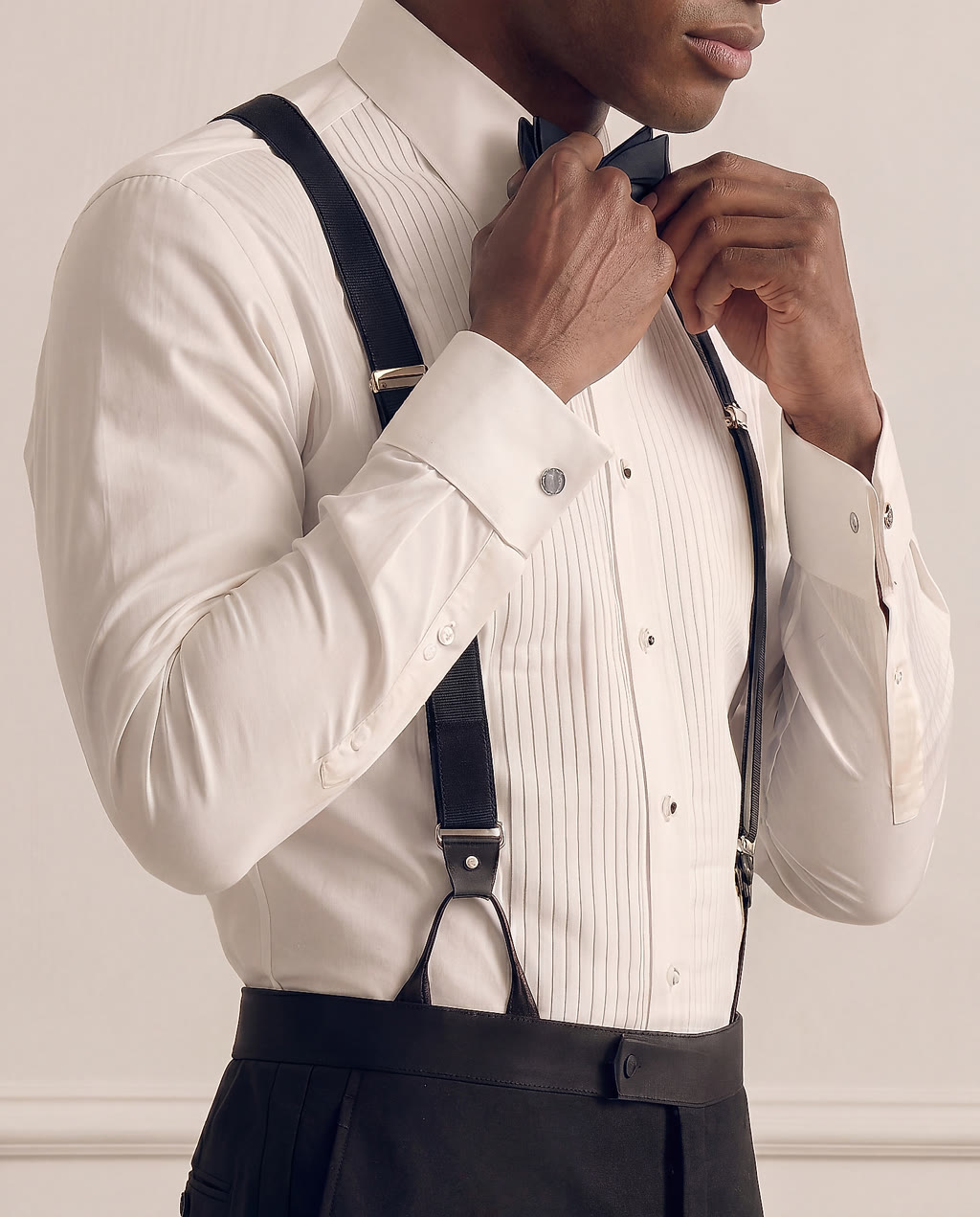
Black tie. Calls for a tuxedo: black or midnight blue, shawl or peak lapel, bow tie and patent shoes. The most formal common dress code.
Black tie optional. A tuxedo is welcome, but a dark suit with a tie is also fine.
Business. A dark suit, a white or light blue shirt and a tie. Neutral and correct for work and meetings.
From words to choice
When you know the words, the choice becomes easier, and a suit cut for you becomes a decision rather than a guess. To go through it with someone, you can meet your personal designer at the Showroom in Copenhagen, see our suits, or read more in our guide to tailor-made suits. Book an appointment when you are ready.
Read also

Talk it through with us at the Showroom.
Book a no-obligation appointment and get advice that starts from your occasion and your wardrobe.