
The men's blazer guide: the jacket a wardrobe is built around
A guide to men's blazers: the difference between a blazer and a suit jacket, the three colours that carry a wardrobe, how it should fit - and the blazer with jeans, chinos and tailored trousers.
House of Vinterberg · · 5 min read
The blazer is the jacket a wardrobe without suits is built around. It goes over a shirt and over knitwear, with jeans and with tailored trousers, to the office and to dinner afterwards - and it does so without looking like a jacket that has lost its trousers. This is our guide to men's blazers: what sets it apart from the suit jacket, which colours carry the most, and how it should fit. Every blazer is made to your measurements in the Showroom.
Blazer or suit jacket: the difference
A suit jacket is the upper half of a suit, cut in the same material as the trousers and meant to be worn with them. A blazer is made as a single piece: in a material with more texture and pattern than a suit can carry, and in a construction that is lighter and softer in the shoulder. That is why a suit jacket looks wrong with jeans - the material is too smooth, the shoulder too formal - while the blazer is drawn for exactly that. With us the line is clear: the blazers are woven in checks, houndstooth and herringbone, the single jackets in suiting materials for those who want to wear the jacket alone and with matching trousers.
The three blazers that carry a wardrobe
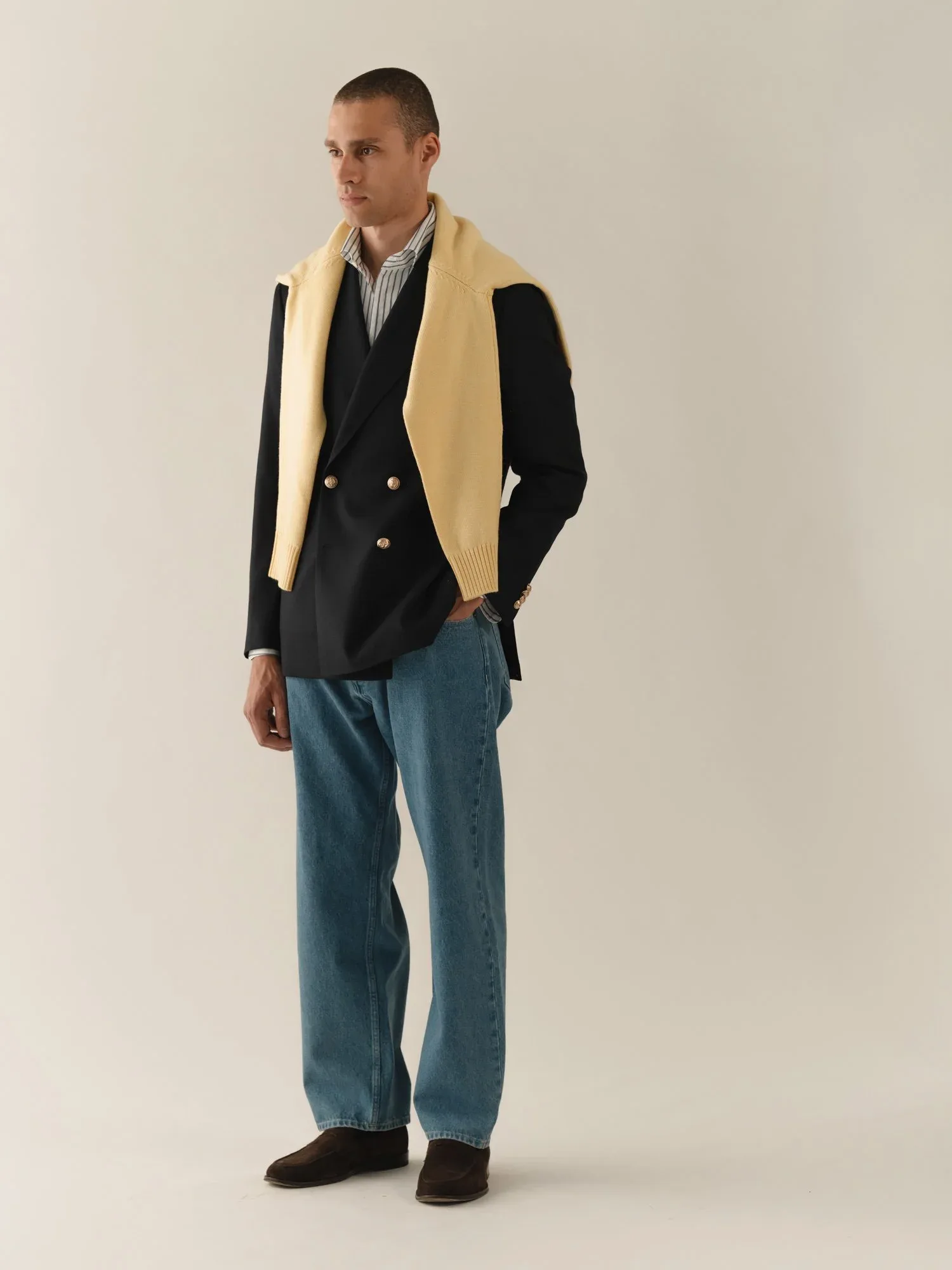
The navy blazer comes first. It suits every complexion, goes with grey, beige and black trousers, and is as at home with jeans as with tailored trousers. Choose it in a material with texture - windowpane or houndstooth - so it is never mistaken for half a suit.
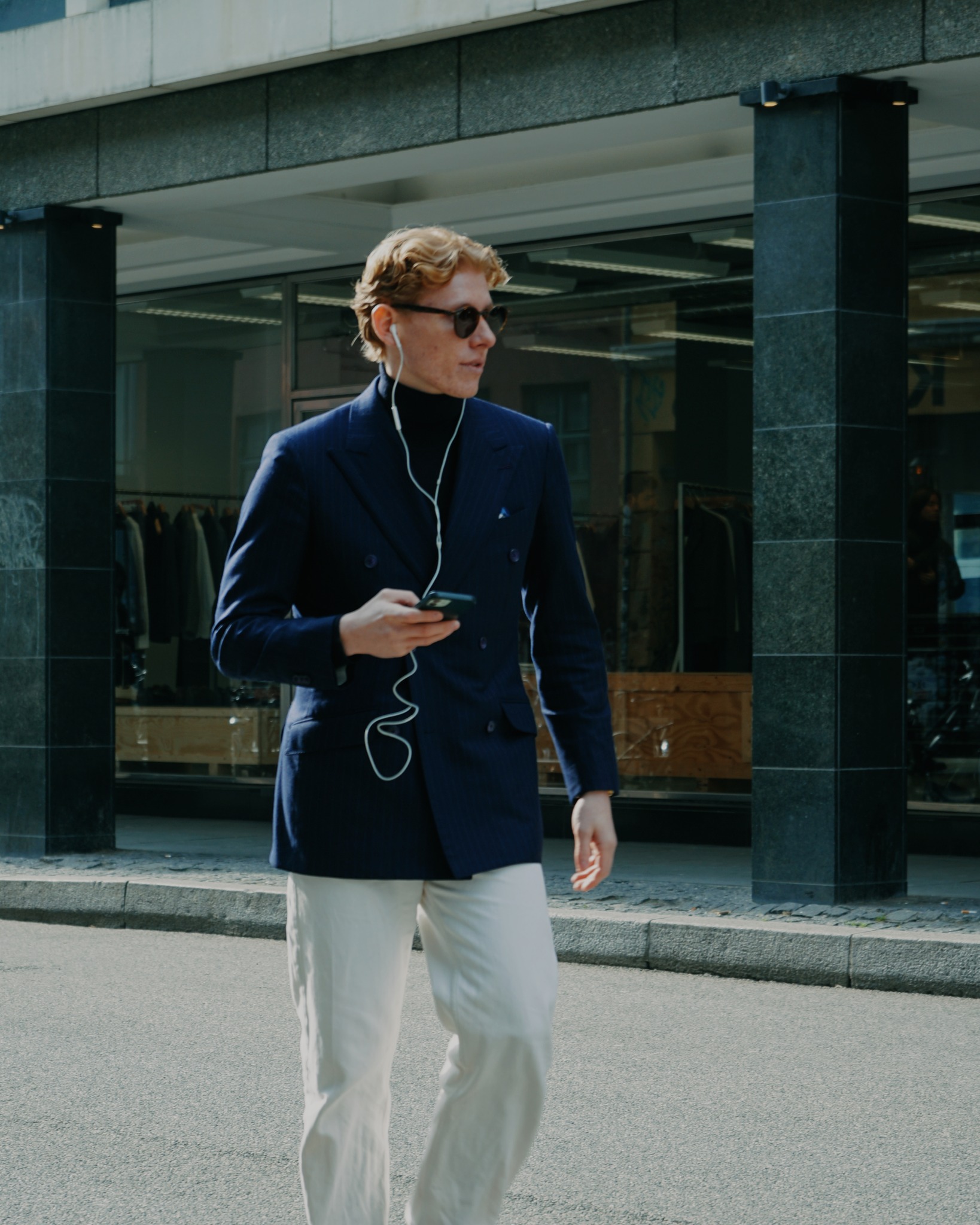
See the blazers: Navy windowpane, Dark navy houndstooth, Navy and rust windowpane.
The grey blazer comes second. Prince of Wales check and herringbone are the classics, and grey tolerates more colour in shirt and tie than anything else. Dark grey and charcoal are the formal ones, light grey the relaxed one.
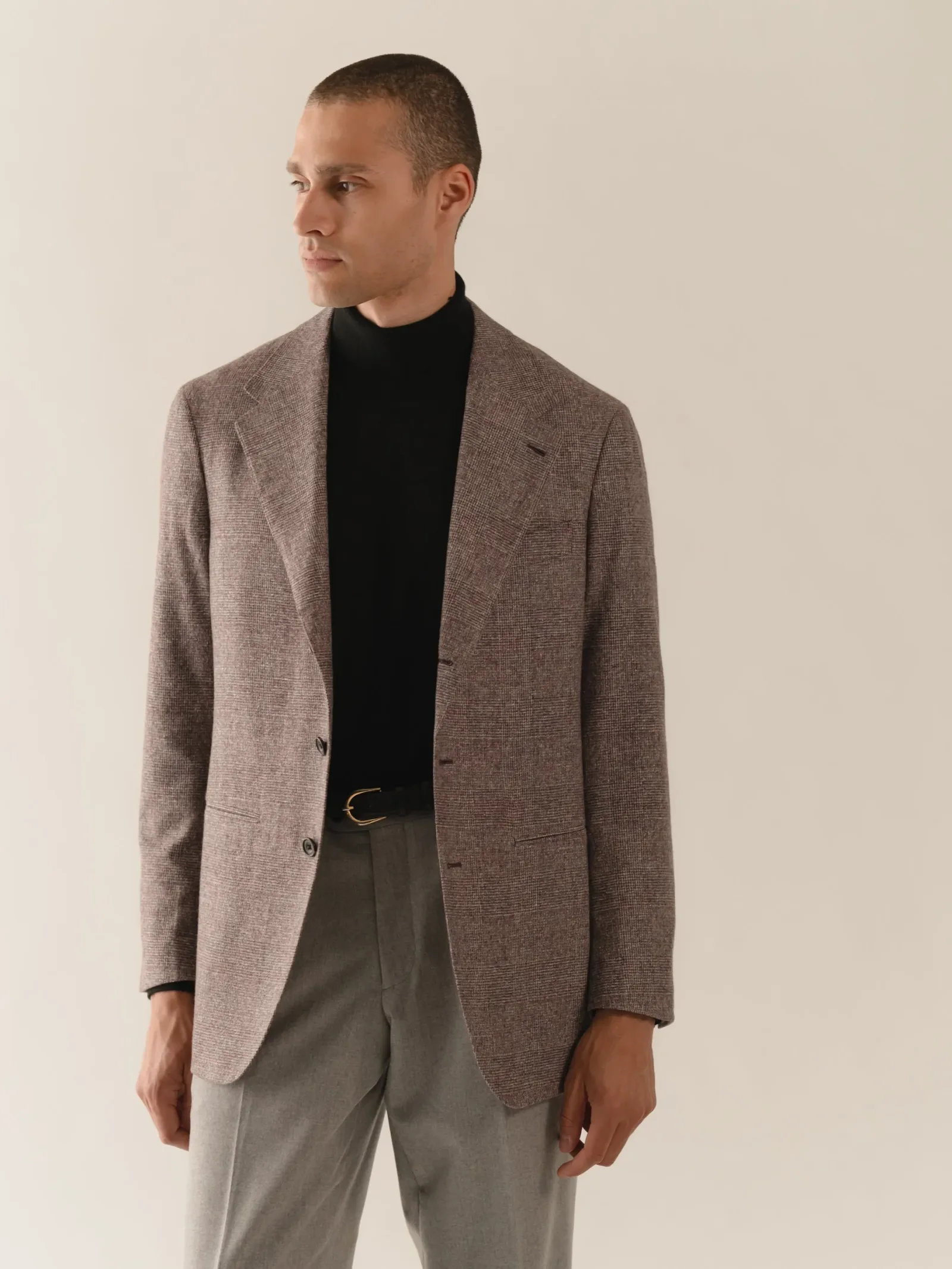
See the blazers: Grey Prince of Wales, Dark grey herringbone, Charcoal Prince of Wales, Grey houndstooth in alpaca and Virgin Wool.
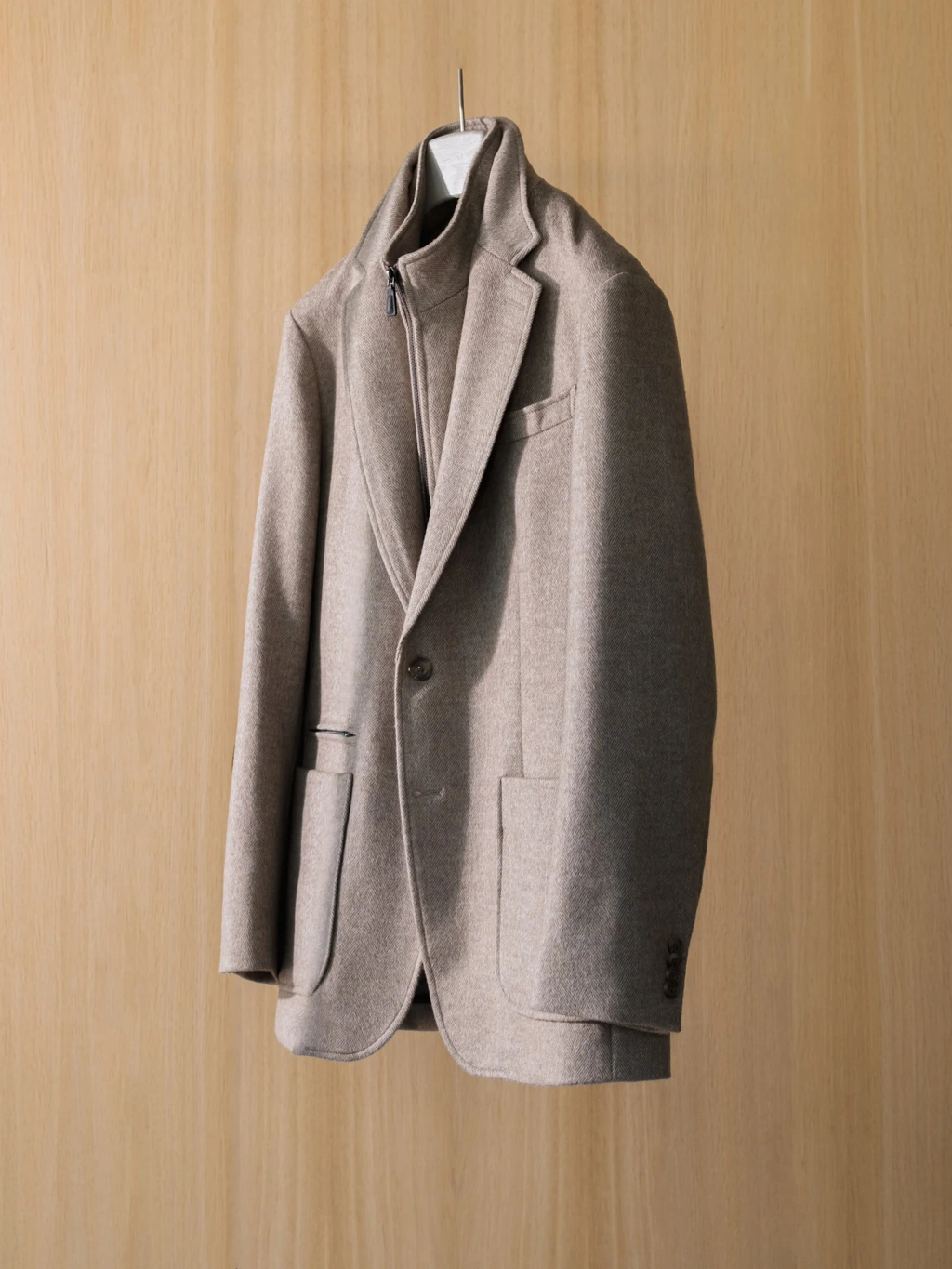
The third is the warm one: olive, taupe or sand. It is the blazer for autumn and for the days when navy and grey feel like uniform. It is worn with brown shoes and earth tones in the knitwear, and of the three it does the most for a wardrobe that already has the first two.
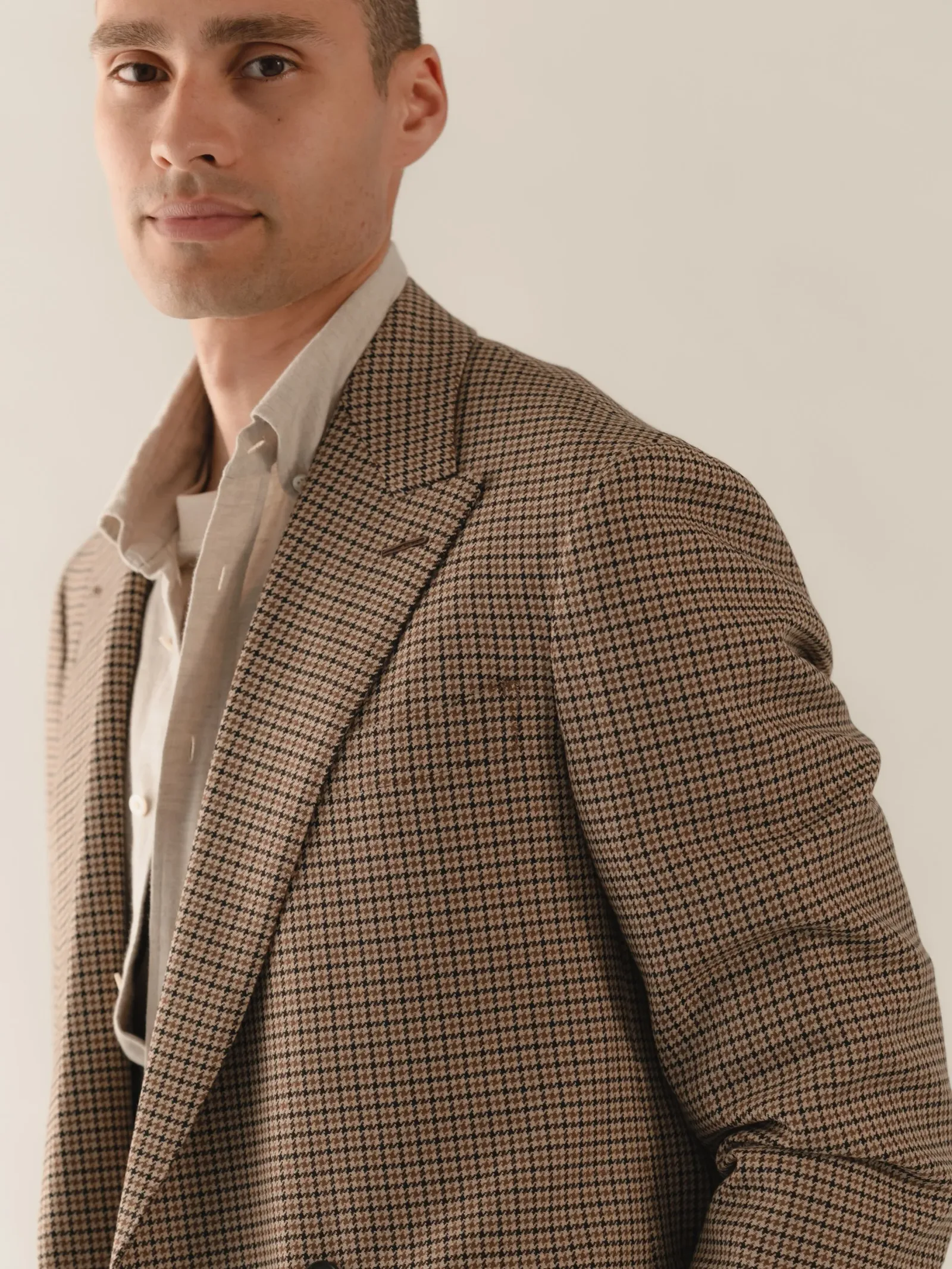
See the blazers: Dark olive houndstooth, Sand houndstooth, Taupe Prince of Wales, Sand houndstooth Super 110s.
How a blazer should fit
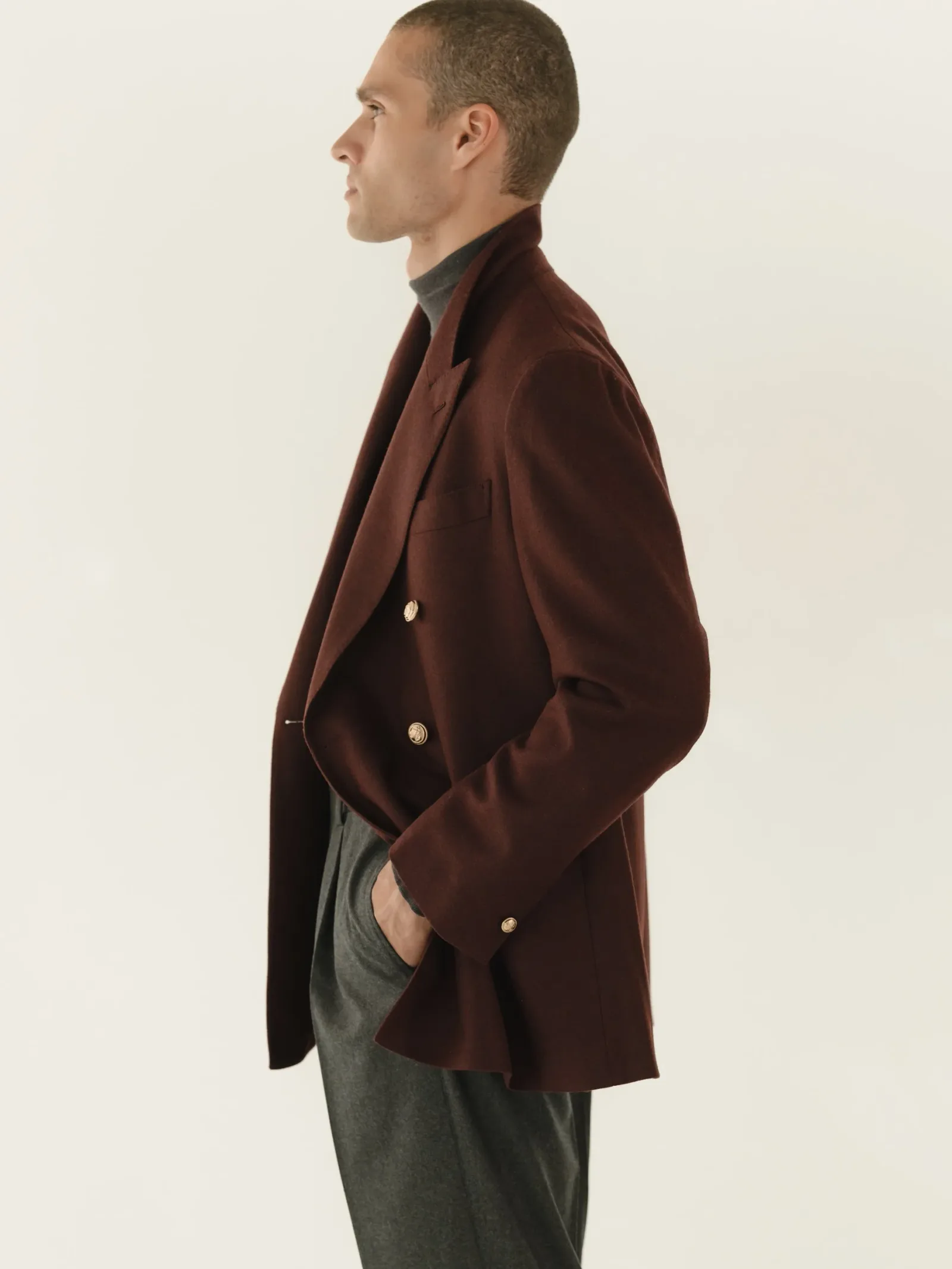
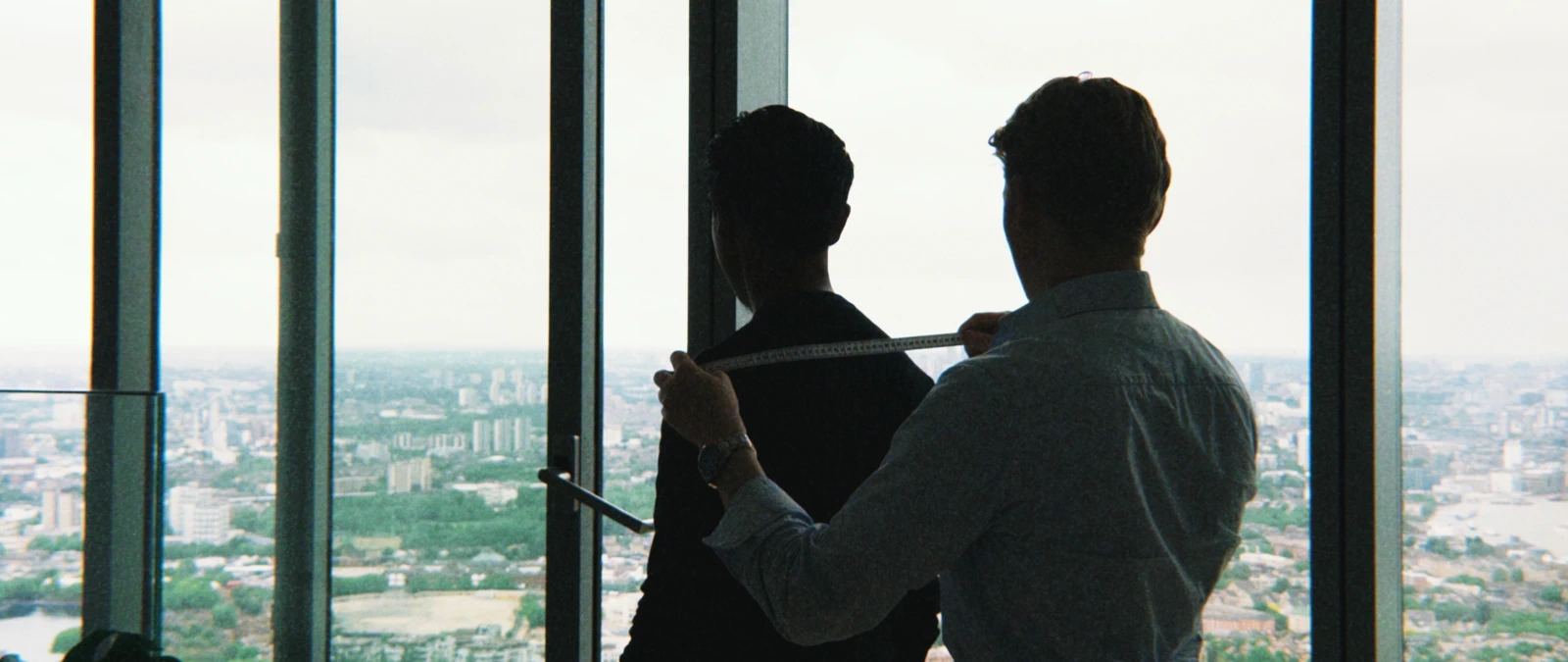
The shoulder decides everything: the seam should end where your shoulder ends, neither before nor after. The jacket should button without pulling into an X at the button, and it should cover the seat, so the length ends around the thumb joint when the arms hang. The sleeve ends at the wrist bone, showing half a centimetre of shirt. These are precisely the measurements the fitting in the Showroom establishes, and the reason a tailor-made blazer sits differently from one in a standard size: shoulder, back and sleeve length are yours, not an average.
Single-breasted or double-breasted
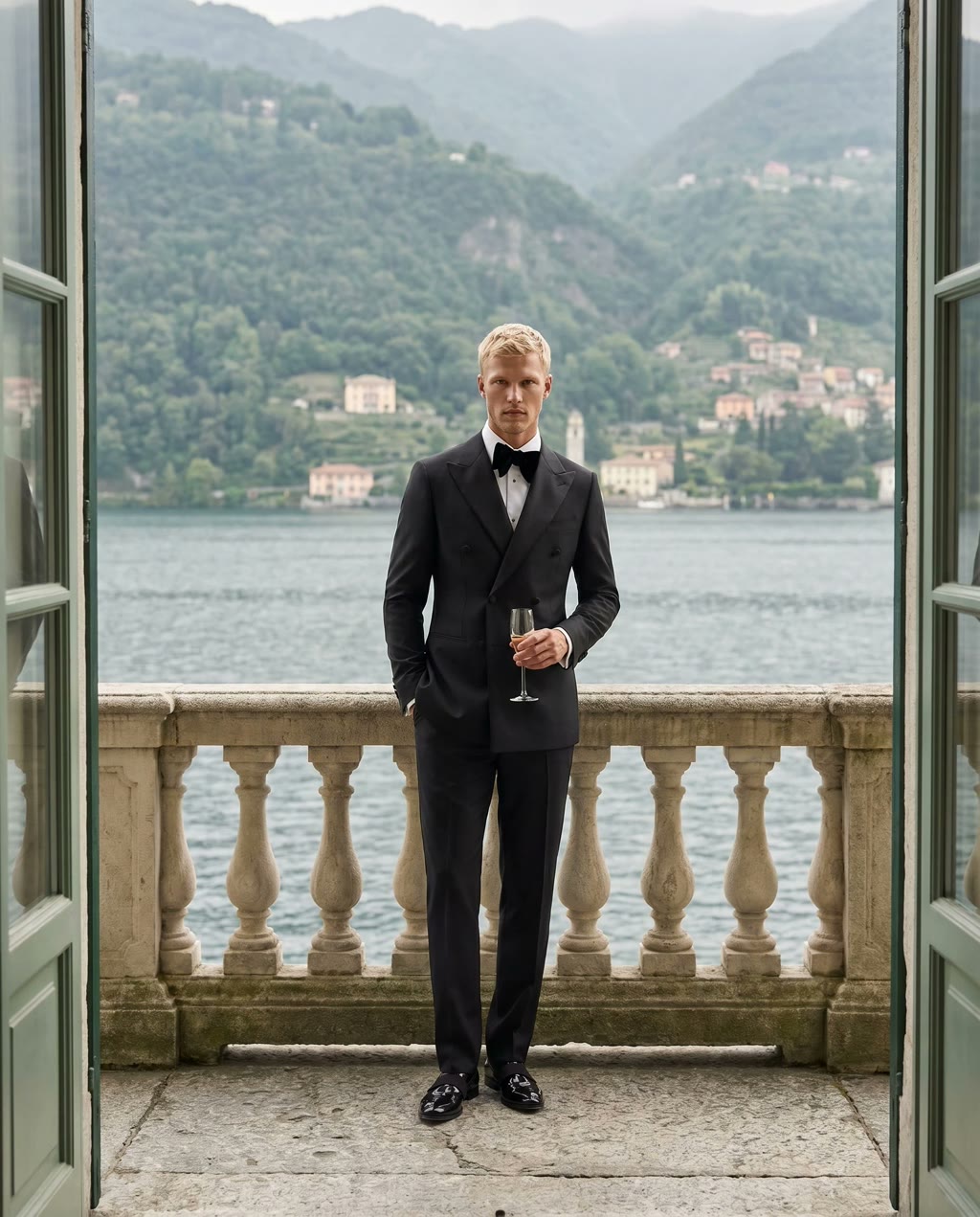
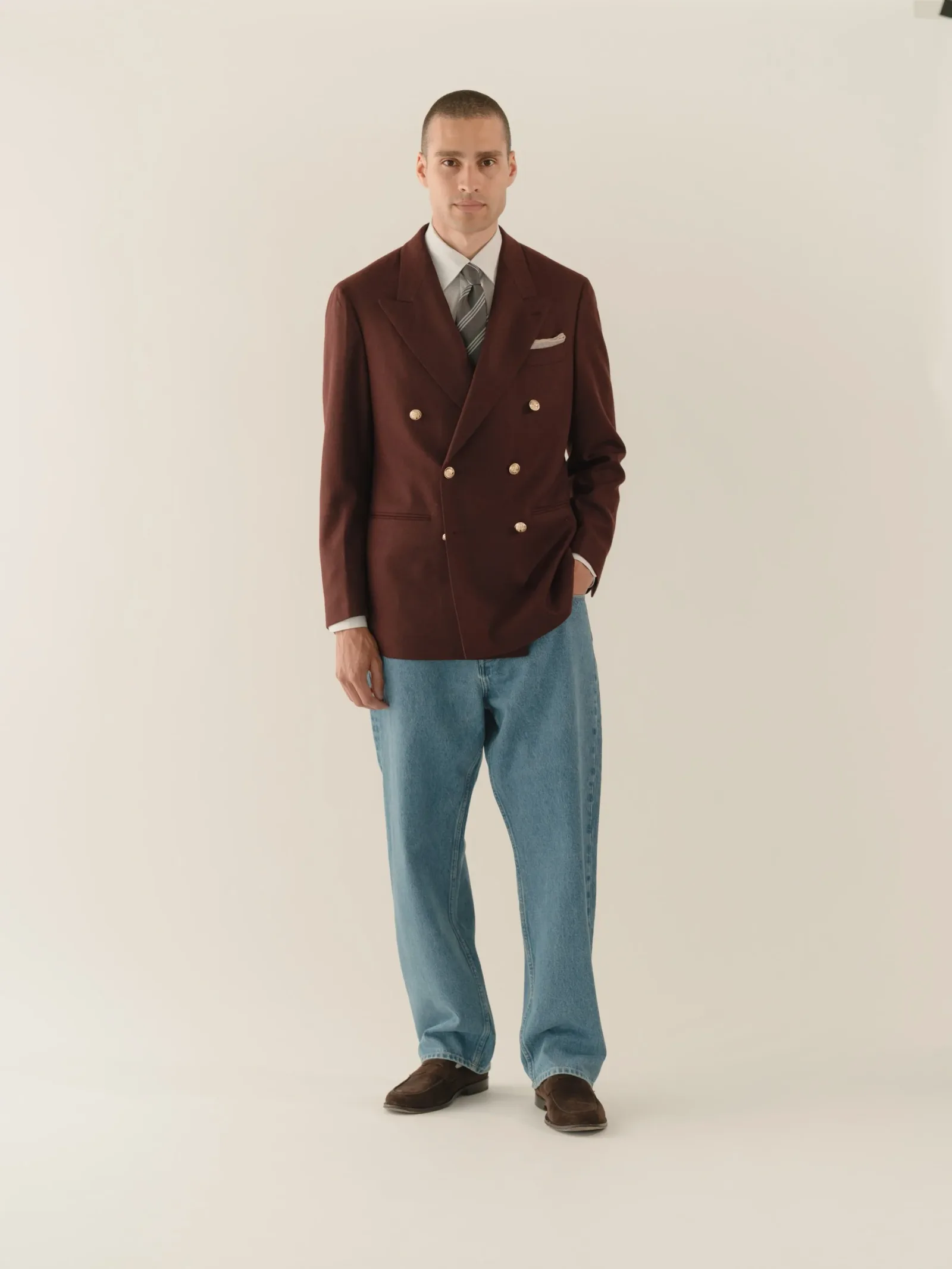
The single-breasted blazer with two buttons is the versatile one - buttoned for the formal, open over knitwear for the informal. The double-breasted with six buttons is assertive and grown-up; it is worn closed, and it does the most for a slim frame and a calm rest-of-the-outfit. If you choose only one, choose the single-breasted. If you choose two, let the second be double-breasted in navy.
The blazer with jeans, chinos and tailored trousers
With jeans the blazer needs texture and soft shoulders, and the jeans should be dark and clean - tapered or wide leg in dark indigo, never distressed. With chinos anything goes; they are the blazer's natural partner, and khaki or off-white under a navy blazer is the combination that never fails. With tailored trousers there must be clear contrast between jacket and trousers, or it looks like a suit that does not match: grey trousers under the navy blazer, never navy under navy.
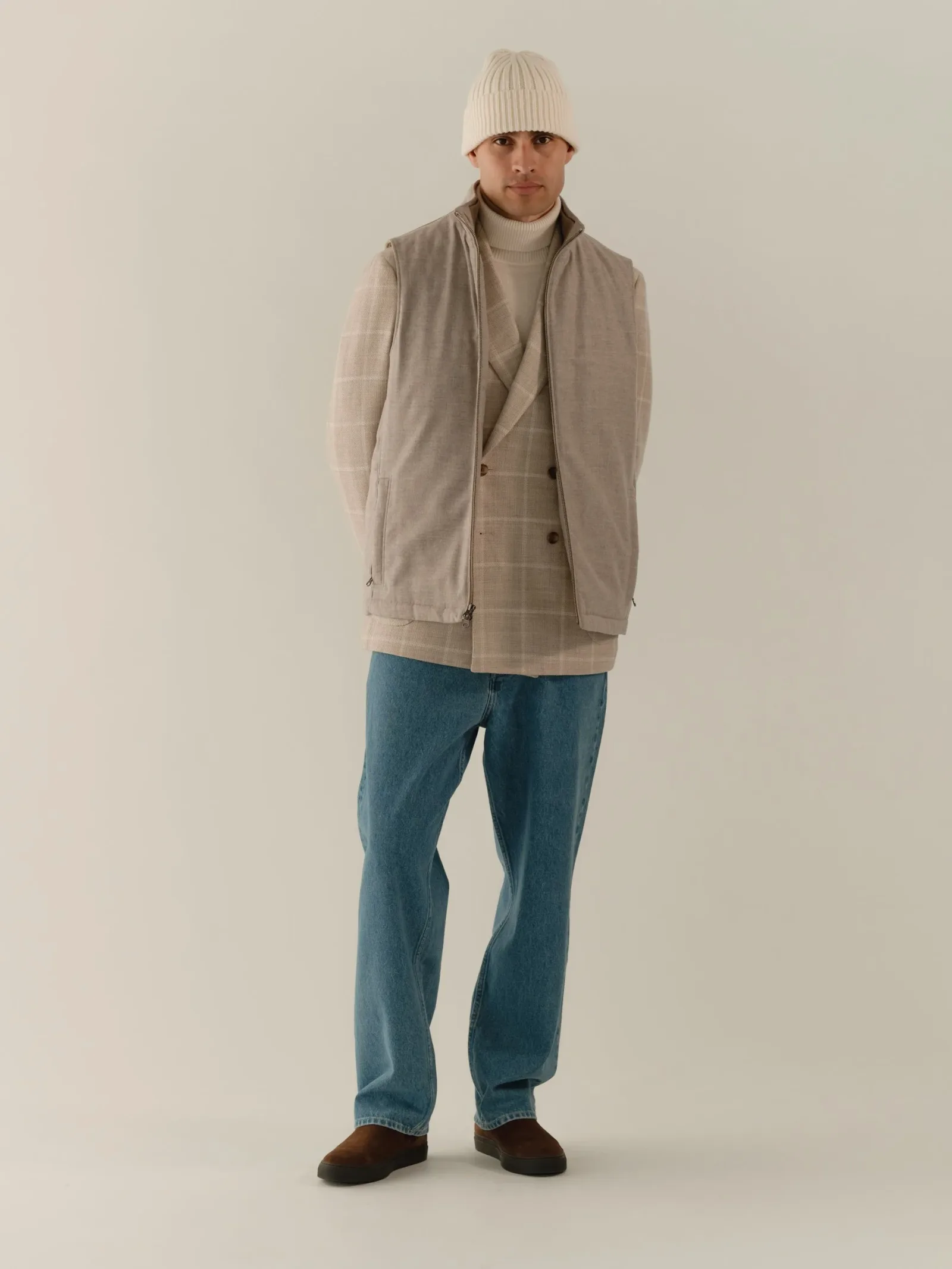
What to wear underneath
A shirt with an open collar is the standard, a crew neck or roll neck is the answer for autumn and winter, and a white T-shirt under a blazer works if the blazer has clear texture and the trousers are clean. A tie belongs with the suit jacket and the formal blazer; for the checked blazer a silk pocket square is enough. See the guide to ties and pocket squares if the blazer is going somewhere formal.
The blazer as an investment
A wool blazer made to your measurements lasts for years if it hangs on a wide hanger and is allowed a day's rest between wears. It grows with the wardrobe: the first navy blazer carries jeans today and tailored trousers in five years. If you are unsure about the material, we cover checks, weaves and wool qualities in the fabric guide, and your personal designer settles it at the fitting.
Frequently asked questions
- What is the difference between a blazer and a suit jacket?
- The suit jacket is half of a suit, cut in the same smooth material as the trousers. The blazer is made as a single piece in a material with texture - checks, houndstooth, herringbone - and with a softer shoulder, so it can be worn with jeans and chinos without looking like a suit without its trousers.
- Which blazer colour should you choose first?
- Navy. It goes with grey, beige and black trousers, with jeans and tailored trousers, and it suits everyone. The grey blazer is number two, and a warm tone such as olive or taupe number three.
- Can you wear a blazer with jeans?
- Yes, if the blazer has texture and soft shoulders and the jeans are dark and clean. A navy windowpane blazer with dark indigo jeans is the safe combination.
- How should a blazer fit?
- The shoulder seam ends exactly at your shoulder, the jacket buttons without pulling, and the sleeve ends at the wrist bone so a little shirt shows. Tailor-made means shoulder, back and sleeve length are your measurements and not a standard size.
Read also
Talk it through with us at the Showroom.
Book a no-obligation appointment and get advice that starts from your occasion and your wardrobe.